

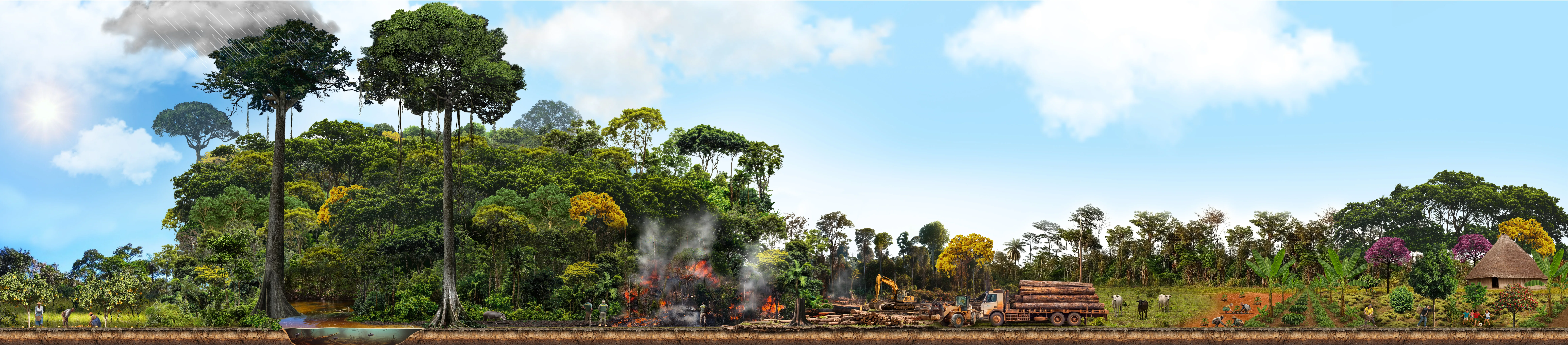
the climate economy
Standing forests: more than just climate regulators, an economic asset
The bioeconomy, remuneration for forest rangers and the creation of investment opportunities for the private sector are among the British government’s priorities in Brazil to ensure the economic value of preserved forests.
Why is it important to tell this story?
Based on data and case studies, this story demonstrates that, in addition to delivering concrete results in the fight against climate change, forests have become a central element in territorial development and the promotion of climate justice, as well as a promising opportunity for private sector investment.
Partnerships and collaborations
The UK supports actions to combat climate change through the International Climate Finance (ICF) fund, with a commitment to invest R$ 82.5 billion (£11.6 billion) globally by 2026. In Brazil, this work involves partnerships with federal and state governments, civil society organisations, research centres and institutions such as Imaflora, Cedac, BNDES and the Brazilian Forest Service.
Mata N’Ativa Glossary
We work to promote access to scientific knowledge. Make sure to explore the glossary to gain a clearer understanding of each of the concepts covered in the text!
Access Glossary
An innovative platform for processing products in the Araguaia River region – a transition zone between the Cerrado and the Amazon – could generate R$21 million (£2,955,332) in annual revenue for 1,041 families in Mato Grosso, 540 of whom are indigenous. Developed with funding from REDD+ Early Movers Mato Grosso (REM MT) – a joint initiative between the UK and Germany to encourage forest conservation – the project is ambitious: to process 10 thousand tonnes of pequi in a four-month harvest. To get an idea of what this means, the State Supply Centre (Ceasa) in Goiânia, currently the main commercial hub for the fruit, handles three thousand tonnes in an entire year.
Planning is needed for this increase in production due to ongoing negotiations with industries across various sectors to integrate pequi oil into their production chains. “The platform will generate income for these one thousand families of indigenous people and smallholder farmers and promote the conservation of biodiversity. We believe that adding value to this product will also increase interest in planting pequi and restoring degraded areas,” says Alessandra Karla, executive coordinator and co-founder of the Cerrado Agroecological Development Centre (Cedac), which runs REM MT.
And every tree counts. Tropical forests like the Amazon are responsible for keeping global temperatures one degree lower, explains Érika Gouveia, Forestry Director at the British Embassy. They sequester carbon dioxide, absorbing over 20% of global greenhouse gas emissions. Of all the world’s forests, 12% are in Brazil.
The REM programme is part of the UK’s portfolio of initiatives through International Climate Finance (ICF), which helps countries to tackle and mitigate the effects of climate change. Investments in Brazil exceed R$4.4 billion (£620 million).

I would say that 60% of the ICF in Brazil is dedicated to various initiatives in forest areas, recognising their value and that of their guardians. Among our long-term goals is to attract new stakeholders and private investment to ensure the sustainability of these projects.
Érika Gouveia, Forestry Director at the British Embassy
Diversas das iniciativas britânicas já atingem esse objetivo. O Mobilising Finance for Forests (MFF), programa cujo objetivo é mobilizar capital para proteger e restaurar florestas, atraiu US$ 10 (R$ 50) de investimento privado para cada US$ 1 (R$ 5) colocado pelo Reino Unido. Exemplo semelhante, mas com foco em ações de pequena escala, o P4F, alavancou £6 para cada £1 em recursos públicos.
A viabilização desses investimentos, porém, depende de uma extensa rede de parcerias com instituições públicas, iniciativa privada e sociedade civil em projetos divididos em três categorias: manutenção da floresta em pé, redução do desmatamento e recuperação de áreas desmatadas.
How to keep the forest intact
REM MT and its socio-bioeconomic initiative, as in the case of pequi, is among the mechanisms focused on keeping the forest intact. “Mato Grosso is the only state in Brazil to have three biomes: the Amazon, the Cerrado and the Pantanal,” points out Henrique da Cruz Ramos, coordinator of the Family Farming, Indigenous Peoples and Traditional Communities sub-programme within the State Secretariat for the Environment (Sema). “We have immense potential for the socio-bioeconomy.”
Pequi was just the first choice of the Family Farming sub-programme. It is appreciated in regional dishes in the Central-West Region of Brazil, but, as certain varieties are not yet consumed, like those from the Amazon, this presents an opportunity to popularise the fruit and its by-products. The project received around R$13 million (£1.8 million), the largest allocation of funds from REM MT. Founded in Goiás in 2000, Cedac, responsible for implementing the programme’s actions, helped establish CoopCerrado, a cooperative that now includes over 7,000 families across six states, working with 173 plant species from various biomes.
The initiative plans to build a plant to extract high-quality pequi oil on a large scale, something that does not exist today. Furthermore, there are plans to utilise various by-products, such as pequi alcohol for the cosmetics industry and biomass for animal feed, which “promotes sustainable use and the conservation of biodiversity,” says Alessandra Karla, coordinator for Cedac. She explains that, to work with family farming, it was necessary to overcome an outdated view that native plants are an obstacle to agricultural development: “At the turn of the century, the effects of climate change were not felt and there was no awareness of the importance of biodiversity and the economic potential of these species.”
The scenario has changed. There is now a demand for seedlings of native species – in Mato Grosso alone, Cedac is already responsible for planting 600,000 plants, taking into account the efforts of REM and other initiatives. The plan is for the industrial platform to be used for various production chains in the transition zone between the Amazon and the Cerrado, such as jatobá and Brazil nuts.

A superfood, baru is a highly nutritious nut, rich in proteins and healthy fats, used both in food and in the production of oils and derivatives. Since 2025, it has been exported to the European Union. Photo: Reproduction/Centro de Desenvolvimento Agroecológico do Cerrado
With the help of another initiative, the Partnership for Forests (P4F), Cedac managed to register the baru nut in the European Union in 2025. This huge market had previously been closed to the small nut from the Brazilian Cerrado, considered a superfood and successfully exported to various other parts of the world.
The sustainable harvesting of baru nuts, pequi and other products is essential for the protection of the preserved forest. “This is where we work most closely with the communities that keep the forest intact. And it’s how we start to encourage and open up markets for the bioeconomy,” explains Erika Gouveia.
In Pará, another bioeconomy project supported by the UK is focused on understanding how indigenous peoples, quilombola communities and traditional communities can lead this process. The state pioneered the creation of a state bioeconomy plan as early as 2022.
The aim is to establish a new economic paradigm in an area that is twice the size of France. “We have a potential bioeconomy that is naturally complex and diverse. We needed a better understanding of the specific characteristics of these territories,” explains Camille Bemerguy, deputy secretary of the bioeconomy at the Pará State Secretariat of the Environment.
The responsibility fell to Trama, an environmental project consultant. With funding from the UK Pact – another UK investment mechanism for actions to combat climate change and stimulate sustainable development – the organisation dedicated 2024 to holding meetings, listening to and understanding demands from the various communities that could be integrated into Pará’s bioeconomy plan. “We visited various regions, spoke with associations and cooperatives, and asked what was missing, what the obstacles were and what opportunities were needed. Then we organised everything and presented it to the state government and the funders,” explains Pedro Leitão, founding director of Trama, who previously headed the Brazilian Biodiversity Fund (Funbio) for 15 years.
We visited various regions, spoke to associations and cooperatives, and asked them what was missing, what obstacles they faced, and what opportunities they needed. We then organised everything and presented it to the state government and the funders.
Pedro Leitão, founding director of Trama
“We provided funding to Trama so that they could develop the proposal submitted to the government of Pará,” says Aurélio Borges, a member of the board of directors of Malungo, the state-level quilombola coordination body that represents 600 communities. “In this way, they were able to incorporate the perspective of those who know the products of these territories, the traditional way of maintaining and respecting the forest,” he explains.
The project is taking shape within the Casa Sociobioeconomia, at the Amazon Bioeconomy and Innovation Park in Belém, a physical meeting space for the traditional peoples, who wanted to play a central role in directing these resources. The place is also an ecosystem of innovation for enterprises and start-ups. “We need to understand how the bioeconomy relates to the residents, their values, causes and aspirations. They are the guardians of the forest,” explains Leonardo Leitão, director of Trama.
In addition to the quilombolas, organisations representing indigenous peoples, extractivists and family farmers also participated in the process. The expectation now, says Aurélio, is to achieve a model of shared management for the Casa Sociobioeconomia and ensure that traditional communities have greater autonomy within the project.
According to Secretary Camille Bemerguy, Trama’s support and its close ties to those on the ground are essential to ensuring the project’s continuity – a strategic concern for a bioeconomy that aims to be a broader movement. “In a state like Pará, policies concerning climate, the economy and social justice need to be interconnected,” she explains. Similar initiatives may soon be replicated in other biomes.
Also through the UK Pact, the British government provided technical support for the development of the National Bioeconomy Policy and plans for the bioeconomy and socio-biodiversity, which are strategic for connecting the forest, science and innovation in the quest for a production model that is fair and inclusive all throughout Brazil.
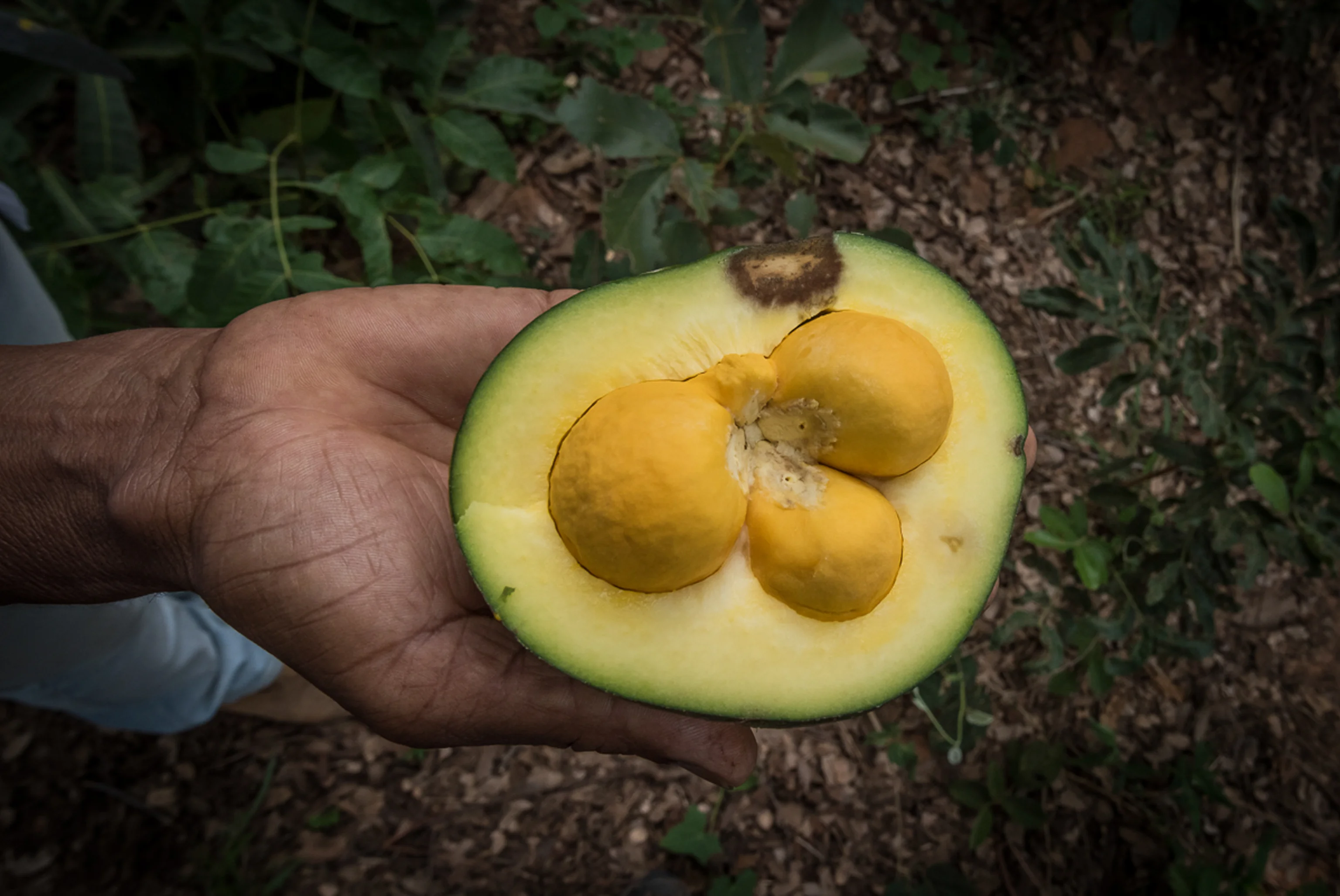
The value of pequi, a symbolic fruit of the Cerrado that also grows in transition areas with the Amazon, goes far beyond food. Oil can be extracted from it, alcohol produced for the cosmetics industry, and biomass for animal feed. Photo: André Dib
How to reduce deforestation
The conversion of the biome’s native vegetation into pastures, monocultures or unproductive areas impacts agricultural production in the entire country and food security for much of the planet: water evaporated from the Amazon irrigates regions of high agricultural production and regulates rainfall and climate patterns. In addition, Brazil is home to 12% of the world’s drinking water reserves.
The Institutional Strengthening and Public Policy programme, run by REM MT, focuses investment on state agencies involved in combating deforestation. “It is a highly demanding and risky endeavour, and the funds have helped bolster the team,” says the sub-programme coordinator, Franciele Nascimento. For instance, the development of a new satellite monitoring system has made it possible to identify deforestation hotspots more quickly, which helps reduce environmental damage and allows teams in the field to take more strategic action.
According to an assessment conducted throughout the programme’s duration, in 2021 and 2022, 160,000 hectares were saved from deforestation in Mato Grosso. And without concrete results, the investments would not be coming in, considering that REM MT is part of the mechanism of the REDD programme (Reducing Emissions from Deforestation and Degradation).
In Brazil, in addition to Mato Grosso, there is also an REM in Acre. So far, the efforts of these two states, combined with REM-supported projects in Colombia, have prevented 31 million tonnes of carbon emissions, according to ICF data from 2025, the equivalent of the annual consumption of over 2.3 million petrol-powered cars.


In parallel to the REM, the United Kingdom is now the second-largest donor to the Amazon Fund, behind only Norway in a group of ten supporting countries. When it was established in 2008, the initiative helped drive a series of significant reductions in deforestation in the Amazon Rainforest. “If we consider the area that was not deforested from 2003 to 2008, Brazil was the country that contributed most to reducing greenhouse gas emissions,” says Nabil Kadri, Environment Director at the Brazilian Development Bank (BNDES), which manages the Amazon Fund.
Altogether, the UK has pledged R$816.9 million (£115 million) in donations. Of this total, almost R$280 million (£39 million) has been disbursed as a reward for emissions reductions in 2017 and 2018, at a rate of R$26 (US$5) per tonne of carbon dioxide (CO²).
According to Fernanda Garavini, head of the Amazon Fund Management Department, the idea is to create a virtuous cycle of payments for results. “In real terms, we have quadrupled our authorisations. We are supporting more and more initiatives, ensuring they have greater impact and on a larger scale,” she says.


One of the priorities is the continuation of the Action Plan for the Prevention and Control of Deforestation in the Legal Amazon (PPCDAM), introduced in 2004. To give an idea, since its implementation, the annual deforestation rate in the region has fallen from 27,800 km² to 5,800 km².
In total, 144 projects have been completed or are currently underway, reaching three out of every four municipalities in the Legal Amazon and affecting the lives of over 260,000 people. For example, Sanear Amazônia draws on the accumulated know-how of the federal government’s Cisterna Project, which, for over 20 years now, has been installing cisterns in order to improve clean-water access for more than 3,500 low-income families in extractive communities in Brazil’s semi-arid region. In addition to its impact on basic sanitation and food security, the project is going to boost sustainable production and income generation in these regions, providing incentives for forest conservation.
The programme AIM For Forest is dedicating R$1.4 million (£200,000) to technological innovation to improve the technical capacity to collect and analyse data before making decisions. According to the UK government, the initiative ensures greater integrity in reducing deforestation, paving the way for public and private investment in the country.

Brazil nut goes through drying and storage at RESEX Rio Cautário, in Rondônia. The Pacto das Águas project allowed almost 300 Brazil nut groves to be exploited and maintained by extractivists in the state. Photo: José Medeiros/Pacto das Águas
How to restore the forest
In regions that have already been deforested, the Brazilian Development Bank (BNDES) has an ambitious programme through the Amazon Fund: the Restoration Arc. The goal is to restore 6 million hectares of native forest by 2030. The first phase of these efforts is being carried out with resources from the Amazon Fund via Projeto Restaura Amazônia.
“The Amazon Fund sends an important message to the world: international cooperation can deliver positive results not only for the country implementing the projects, but for the partners as a whole,” says Nabil Kadri of the BNDES. “The fund would not exist without the Brazilian government’s commitment to reducing deforestation and without the support of the international community,” adds Fernanda Gavarini, head of the Amazon Fund’s management department.
Forest-focused projects supported by the United Kingdom
Activities involve partnerships with federal and state governments, civil society organisations, and research centres.
Another example is the Institute for Forest and Agricultural Management and Certification (Imaflora). Founded 30 years ago, the organisation works alongside the Brazilian Forest Service to establish a suitable model for granting forest concessions for restoration. The initiative received funding from a UK Pact call for proposals.
With approximately R$7.8 million (£1.1 million) in funds, the effort involves “various bottlenecks caused by limited human resources and finances,” says Tayane Carvalho, a forestry analyst at Imaflora. The support covers consultancy, research, engagement with communities and local authorities, communication and other efforts.
Today, 1.3 million hectares have been authorised for exploitation in national forest areas (Flonas) or on public land. According to the Imaflora team, it is possible to expand this area to 18 million hectares in the long term. The figures make it clear that it is worth the effort. In Flonas where concessions exist, 92% of deforestation occurs outside the concession areas.
As part of Imaflora’s efforts, work is underway to help local authorities receive a share of the taxes paid by concession-holding companies based on production. These funds must be spent by the environmental departments and, in some cases, “the amount is equivalent to the agencies’ annual budget,” says Carvalho.
In Portel, Pará – a municipality whose Human Development Index (HDI) is one of the lowest in Brazil – funds obtained thanks to the concession law have already allowed enforcement staff to purchase five electric motorcycles and several other pieces of equipment, helping to raise awareness of the need to reduce burning among traditional communities. Soon, the municipality’s Environment Department will acquire machinery worth R$1.2 million (£168,800) to create a forestry tractor. With this equipment, “we can clear areas for farming without having to use fire,” says Secretary Igor Diniz. As a result, Portel has reduced the amount of burning in the city’s territory by almost 90%.

The Amazon Forest standing, in Rondônia. The Pacto da Floresta project supports initiatives to strengthen the production chains of Brazil nuts, rubber, and açaí in two indigenous lands and three extractive reserves in the state. Photo: Reproduction/Pacto da Floresta
Towards an attractive economy based on preserved forests
Forest health as economic asset: this is a paradigm shift. COP 30 was a milestone in this regard. “For the first time, the COP presidency gave equal recognition to the forests and energy, announcing a roadmap for each sector,” says Erika Gouveia of the British Embassy.
At a time when private sector participation in these efforts is beginning to gain traction, it is up to the international community to give it a little nudge. “There is not enough public money in the world to end deforestation. We need to bring in new players, and resources from the UK can act as a lever to innovate and create new partnerships,” explains Gouveia.
Part of the MFF programme, the Restoration Fund (TRF) has already mobilised R$2 billion (£287 million) in private capital and signed forward purchase agreements for carbon credits with giants in the technology sector. In Latin America, the initiative designates degraded land for forest protection and commercial tree planting. The goal is to protect and restore approximately 135,000 hectares of forest and plant an equivalent area of certified timber.
In the words of André Chaves, of Imaflora, the forest and all its environmental services know no borders. “Local efforts have greater potential when the international community supports projects that may seem outside a government’s short-term interests,” he says. Ultimately, conservation is a win-win for everyone.
This story was produced with support from the UK government’s International Climate Finance (ICF) programme, through an institutional partnership with the British Embassy in Brazil. This is branded content, developed by Mata N'Ativa based on research and interviews.
GLOSSARY
Pequi
Rich in oil and nutrients, it is a fruit typical of the Brazilian Cerrado, with a distinctive scent and flavour, widely used in regional cuisine
Socio-bioeconomy
An economic model that incorporates the generation of income, the conservation of nature and the empowerment of local communities, particularly traditional peoples, by utilising the resources of biodiversity in a sustainable manner
Greenhouse effect
A natural phenomenon by which gases in the atmosphere trap some of the sun’s heat, maintaining the Earth at a temperature suitable for life. When intensified by human activities, it contributes to global warming
Forestry tractor
Heavy duty machinery used for the selective removal of trees or excess vegetation, with the aim of improving forest growth, reducing the risk of fire and enhancing the ecosystem’s health
Baru
Seed of the fruit of the baru tree, a tree native to the Cerrado. It is a highly nutritious nut, rich in protein and healthy fats, used both for food and in the production of oils and derivatives
Carbon credits
A way of measuring and offsetting greenhouse gas emissions, such as through reforestation and by protecting woodlands against deforestation
