


Climate economics
Energy transition: Brazil’s role in the race for low-carbon technologies
With its high potential for low-carbon hydrogen and offshore wind power, as well as the ability to influence international debates, Brazil is establishing itself as a strategic partner for the UK in innovative projects that will usher in a new era of clean, renewable energy generation.
Why is it important to tell this story?
The energy transition is a unique opportunity for Brazil to transform its natural advantage into global leadership, attracting investment, strengthening the economy, and reducing climate risks. This story highlights the partnerships between the UK and Brazil in the pursuit of decarbonisation, through technology sharing, trade ties, and government partnerships.
Partnerships and collaborations
The UK supports actions to combat climate change through the International Climate Finance (ICF) fund, with a commitment to invest R$ 82.5 billion (£11.6 billion) globally by 2026. In Brazil, actions in the energy sector involve partnerships with the Ministries of Finance, Mines and Energy (MME), and Development, Industry, Trade and Services (MDIC), as well as various companies.
Mata N’Ativa Glossary
TWe work to promote access to scientific knowledge. Make sure to explore the glossary to gain a clearer understanding of each of the concepts covered in the text!
Access Glossary
Immense rivers, sunshine year-round, steady winds, biomass: Brazil’s abundant natural resources have made its electricity mix one of the cleanest in the world, with around 90% of its energy generated by renewable resources. This potential has placed the country at the centre of international climate decisions: increasingly, nations keen on reducing their greenhouse gas (GHG) emissions are seeking to forge partnerships with Brazil in the race for low-carbon technologies.
The climate emergency demands swift implementation of a new model. As severe natural disasters have stricken Brazilian cities, exposing the country’s vulnerability to extreme weather, the energy transition – the process of replacing fossil fuels with cleaner energy sources – is now viewed not only as an environmental priority but also a factor in economic and geopolitical security.
All over the world, progress on this agenda has gained momentum in response to the need to curb global warming and reduce events such as major floods, droughts, and heatwaves. The search for more sustainable energy sources is mobilising governments, businesses, financial institutions, and international organisations, requiring coordination across energy, industrial, and financing policies.

The UK Secretary of State for Energy Security and Net Zero, Ed Miliband (centre), visited the Port of Pecém in August 2024. The industrial complex is set to receive US$35 million to expand green hydrogen production. Photo: British Embassy
Strategic partnership between Brazil and the United Kingdom
The birthplace of the Industrial Revolution and the first G7 country to commit to a net-zero emissions target by 2050, the UK is working on a new phase of energy development in the 21st century. The global initiative involves three pillars: investment in financing programmes, commercial ties between major companies, and government partnerships.
And Brazil has all the attributes to be a key ally in the UK’s strategy for international decarbonisation. This rapprochement reflects both the significance of Brazil’s current energy mix and the availability of natural resources capable of sustaining new chains of clean energy based on solar and wind power, as well as biomass and low-carbon hydrogen.
The UK’s interest in Brazil is grounded in three factors, explains Valmir Dias, National Energy and Decarbonisation Manager at the British Embassy in the country: the high share of renewable sources in Brazil’s electricity generation, the abundance of natural resources capable of supporting new production chains, and the country’s diplomatic influence in international debates on climate and sustainability.

The partnership between Brazil and the UK strengthens both countries’ ability to meet their climate commitments, both domestically and in international negotiations. By combining British expertise in decarbonisation policies with Brazil’s renewable potential, we are creating concrete solutions to accelerate the energy transition and decisively contributing to the goals of the Paris Climate Accords.
Valmir Dias, National Manager of Energy and Decarbonization at the British Embassy in Brazil
The cooperation gained an institutional framework in 2023 with the launch of the UK-Brazil Partnership for Green and Inclusive Growth, which coordinates bilateral collaboration in five main areas: climate, forests, agriculture, energy and sustainable financing, reiterating the importance of complying with the 2030 Agenda and the Sustainable Development Goals (SDGs). In the energy sector, the aim is to promote a transition that is considered fair and equitable, combining the exchange of technical knowledge, regulatory cooperation, and the mobilisation of financial resources.
From the UK’s perspective, the closer ties with Brazil are also aligned with a broader movement to reorganise global supply chains linked to low-carbon technologies. Equipment used in hydrogen production, such as wind turbines, batteries, and electrolysers, rely on complex supply chains that begin with mineral extraction and proceed through various industrial stages. The strategy is to increase the number of countries participating in these chains, thus reducing risks to energy and food security in the event of resource shortages due to global conflicts.
This initiative is in line with Brazil’s international climate commitments. Having updated its Nationally Determined Contribution (NDC) in 2024, the country set a target to reduce greenhouse gas emissions by between 59% and 67% by 2035 compared to 2005 levels, reinforcing the energy transition as central to its national climate strategy.
“Brazil and the UK have positioned themselves as key allies in the construction of a climate-resilient global economy. By collaborating to strengthen sustainable value chains, such as low-emission hydrogen and offshore wind, we are contributing not only to our domestic targets but also to the credibility of international negotiations at a time when the world needs results-based climate leadership,” says Dias.
Climate finance and technological cooperation
Part of the strategy consists in funding tools and programmes for technical cooperation. One of the main initiatives funded by the British government is the Partnership for Accelerated Climate Transition (UK PACT), which supports projects geared toward the low-carbon economy in partner countries. The commitment is to scale up actions to combat climate change and collaborate on sustainable development, promoting jobs, and economic growth.
The initiative has already sponsored 24 ongoing projects and around ten completed ones, spanning such areas as mobilising green investment, the bioeconomy, MRV (Monitoring, Reporting and Verification) mechanisms, energy efficiency, industrial decarbonisation, and the development of hydrogen strategies.
“UK PACT’s focus is not on building infrastructure projects from scratch, but rather to support local initiatives with technical expertise, training and resources in order to accelerate the energy transition,” says Débora Lima, energy policy officer at the British Embassy in Brazil. “These are projects that directly address the government’s needs, implemented by specialist organisations, and selected through open calls. The Ministry of Mines and Energy (MME) and the Ministry of Development, Industry, Trade and Services (MDIC) are the main counterparts.”
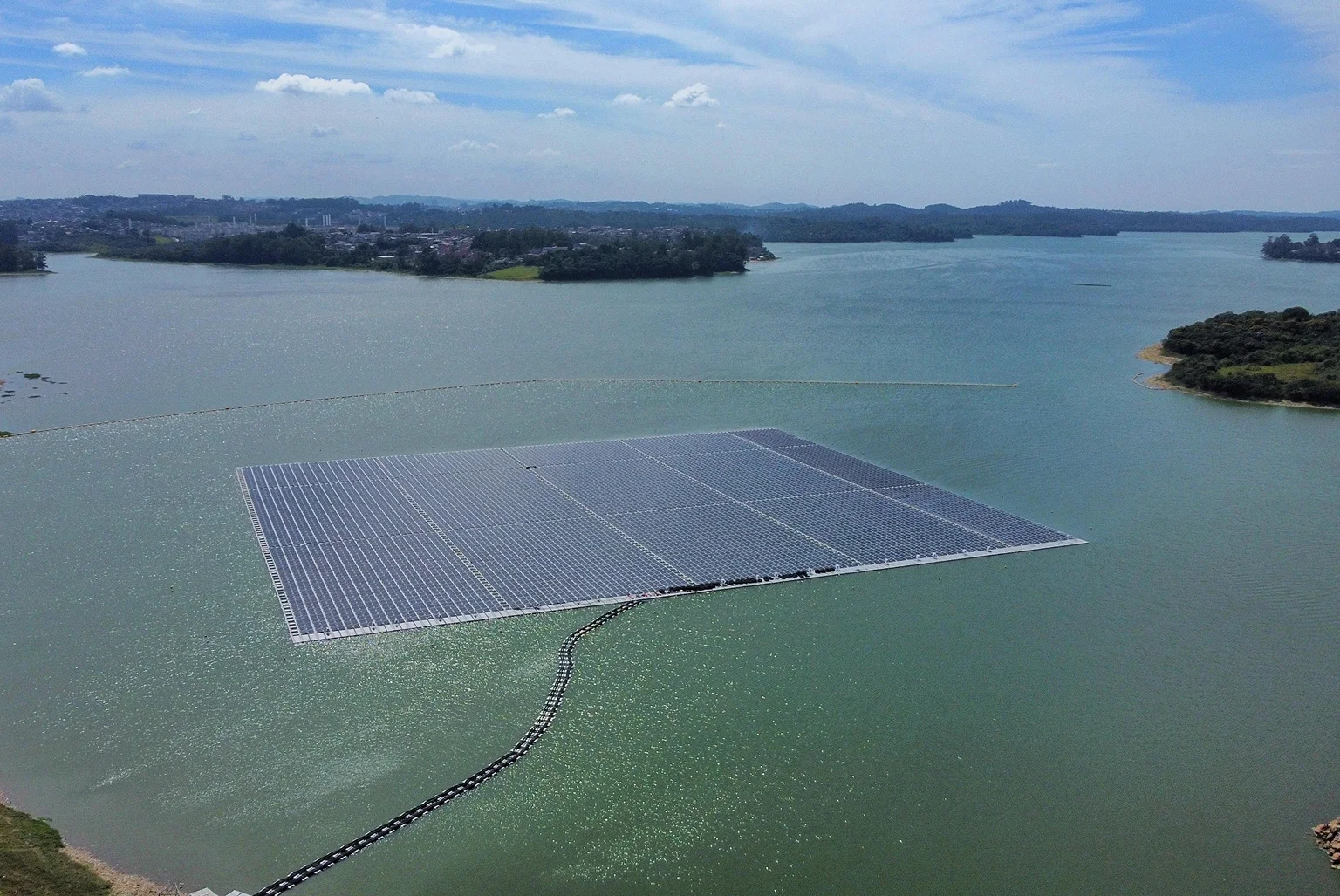
Located in the city of São Paulo, on the waters of the Billings Reservoir, Araucária is Brazil’s largest floating solo power plant. Brazil’s energy mix is already predominantly renewable, but the country has the potential to further expand its generation capacity with wind and solar power. Photo: Marcelo S. Camargo/Government of the State of São Paulo
Another relevant component of cooperation involves the Brazil–UK Hydrogen and Industrial Decarbonisation Hubs (Brazil–UK Hydrogen Hub), platforms created to strengthen Brazil’s low-carbon hydrogen supply chain and integrate the country into the global markets of this new energy industry. The initiative combines technical cooperation, regulatory support, and financing for industrial projects, while also strengthening the implementation of public policies and the innovation environment for sustainable technologies.
The Climate Investment Funds (CIF) is one of the world’s largest multilateral climate finance partnerships, designed to support developing countries in implementing low-carbon technologies and models. “In the Brazil–UK context, the 2024 call for proposals to identify industrial hydrogen clusters was structured so as to enable projects in Brazil to access resources from the Industry Decarbonisation Programme, which is part of the CIF,” explains Lima.
The call for proposals secured investments of R$6 billion (£854 million) in hydrogen hubs and R$3 billion (£427 million) in climate projects in Brazil, focused on sustainable agriculture and the development of the green economy.
“It is a multilateral platform to strengthen international cooperation and promote hydrogen production as a central element of the transition to a net-zero future. It was created by the MME and the British government’s Department for Energy Security and Net Zero (DESNZ) during COP28 to accelerate the development of low-emission hydrogen in Brazil and strengthen its integration into global markets,” says Lima.
“The hub’s objective is to help Brazil establish governance, market structures and financing for the implementation of the National Hydrogen Programme (PNH2). And for the UK, the aim is to strengthen international low-carbon hydrogen value chains, expanding markets for British technologies and collaborating with a partner that possesses vast renewable potential.”
Low-carbon hydrogen and the new frontier in the energy transition
Among the technologies considered strategic for global decarbonisation, low-carbon hydrogen is emerging as one of Brazil’s main prospects. Produced from water electrolysis – a process that separates hydrogen from oxygen using electricity from renewable sources – it is considered a promising alternative for replacing fossil fuels in industrial sectors that are difficult to electrify, such as steelmaking, heavy haulage, and fertiliser production.
In practice, once it is produced, hydrogen can be stored and transported for various uses. In transport systems, for example, it can be used in fuel cells – devices that convert hydrogen back into electricity through a chemical reaction with the oxygen present in the air. This reaction generates electricity capable of powering electric motors – in buses, lorries or trains, for example – releasing only water vapour as a by-product, with no carbon emissions. In other cases, hydrogen can also be used directly as a fuel or as an industrial raw material, replacing coal, natural gas or petroleum derivatives in energy-intensive production processes.
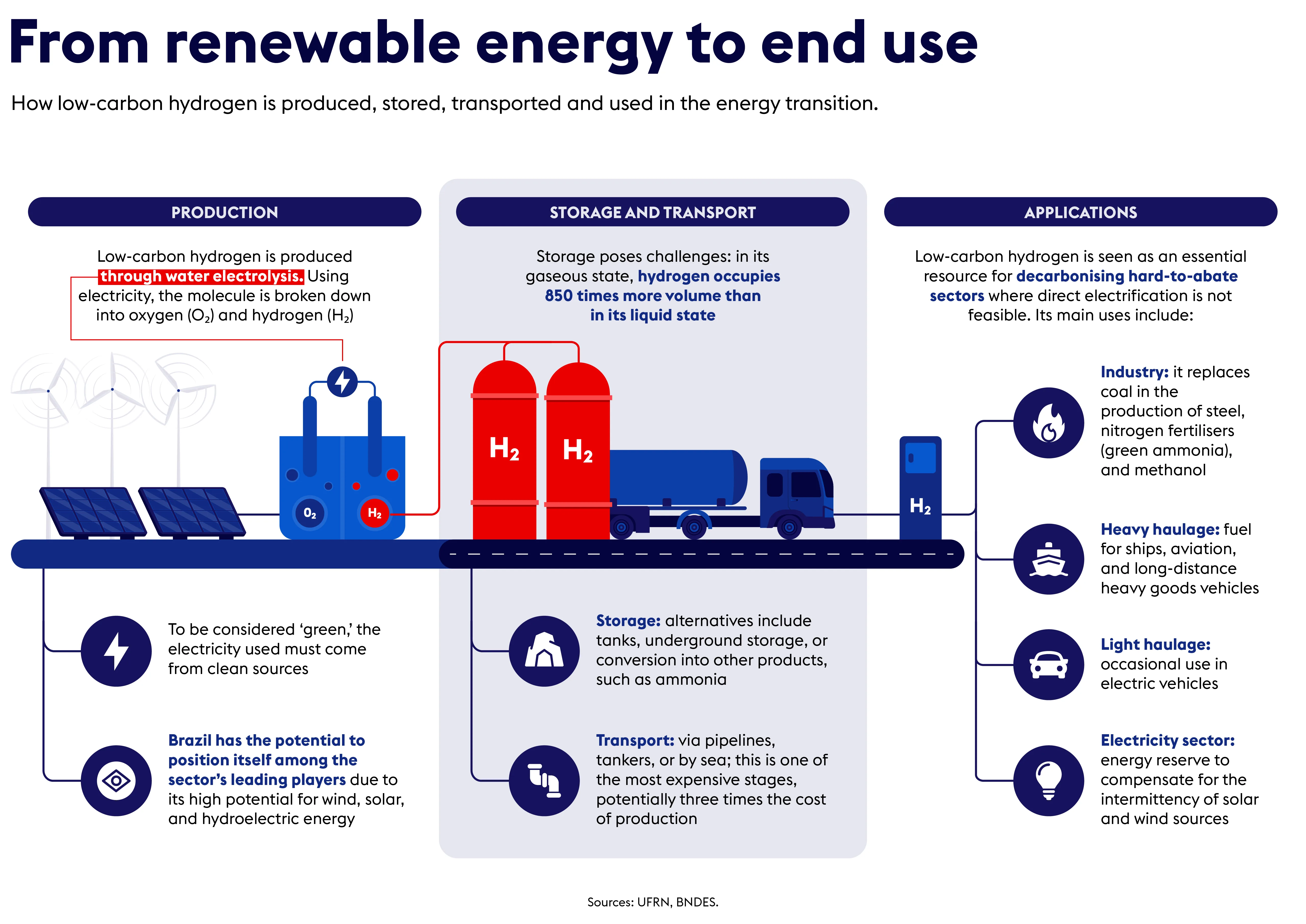

According to Sávia Gavazza, General Coordinator for Energy Transition at the Ministry of Finance, the country has a significant structural advantage in developing this new production chain. “Brazil has already made massive investments in renewable energy throughout its history. Today, we have an electricity mix with around 90% renewable sources, which is a huge asset for attracting investment in new low-carbon technologies,” she says.
Despite this potential, experts point out that the country still faces challenges in transforming this energy base into technological leadership. “Building a competitive industry depends on science, technology, and innovation, as well as clear regulatory tools and sound financial instruments. We did this very well for wind energy, but, at a certain point, we faltered, and still haven’t achieved leadership in clean energy,” Gavazza acknowledges.
In the UK, low-carbon hydrogen also occupies a strategic position. Its applications are primarily focused on the decarbonisation of heavy industry, residential heating, and long-distance transport. The country has invested in the creation of integrated industrial clusters, notably in such regions as Humber and Teesside – hubs for hydrogen production and use where carbon capture projects, energy infrastructure, and energy-intensive industries are concentrated. The British strategy combines regulatory incentives, public funding, and market mechanisms to stimulate demand and enable projects on a commercial scale.
In Brazil, this industry’s progress still depends on the consolidation of the regulatory framework. In recent years, the federal government has made advances in structuring policies for the sector, including the National Hydrogen Programme (PNH2) and discussions on certification, tax incentives, and defining standards for low-emission hydrogen. Experts point out that regulatory certainty will be a decisive factor in attracting investment and ensuring the international competitiveness of Brazilian products.
Green industry and decarbonisation in Brazil
Within the Brazilian government, one of the bodies responsible for transforming the climate agenda into an economic strategy is the Ministry of Development, Industry, Trade and Services (MDIC). The ministry coordinates policies focused on industrial competitiveness and the country’s entrance into new global production chains. Within this structure, the Secretariat for Green Economy, Decarbonisation and Bioindustry is directly involved in formulating public policies aimed at reducing industrial emissions and promoting clean technologies.
Brazil’s prominence in discussions on climate and sustainable development is nothing new, according to Júlia Cruz, the secretary responsible for the area. Since ECO-92, held in Rio de Janeiro, the country has played an active role in international negotiations, combining environmental diplomacy with domestic policies focused on the energy transition.
“Brazil has taken on a role of international leadership that stems not only from diplomacy but also from practice. We have a strong tradition in biofuels, which dates back to the ethanol programme of the 1970s, as well as an extremely clean energy mix,” she explains.
This track record strengthens Brazil’s position in international negotiations and expands opportunities for cooperation with developed countries. “International cooperation is essential,” says Cruz. “Brazil is looking to maintain relationships with both developing countries and advanced economies, because we believe that it is mutually beneficial when partnerships are built in a balanced manner.”
In the context of cooperation with the United Kingdom, the secretary continues, the focus has been on studies, assessments, and support for decision-making, including training, in terms of energy-intensive sectors, involving the six that emit the majority of Brazil’s greenhouse gases (glass, chemicals, aluminium, plastics, cellulose, and steel). “This is very important because, while the industrial sector’s emissions are relatively low compared to other countries, around 10% is still significant.”
Júlia Cruz explains that, with the UK’s support, it is possible to conduct an assessment of these sectors to understand which regulatory approaches can assist the energy transition, as well as study methodologies that make sense for the carbon market so that the country is ready to receive national or international funding.
The decarbonisation agenda is 100% focused on the population. What we are talking about is reducing the effects of climate change so that there are less natural disasters, like the floods in Rio Grande do Sul and fires which are becoming increasingly frequent.
Júlia Cruz, Secretary of Green Economy, Decarbonization and Bioindustry at MDIC
Due to the high share of renewable sources in the electricity mix, Brazil’s emissions profile differs from that of other major economies. Data from the Greenhouse Gas Emissions Estimation System (SEEG) indicate that, in 2024, the majority of emissions in the country were associated with land-use change and forestry (42.2%) – particularly deforestation – and agriculture and livestock (29.2%), while the energy and industry sectors – which are more significant in most countries – account for a smaller share (4.5% and 4.4%, respectively). This scenario underscores the importance of an integrated approach, in which the energy transition is aligned with policies for environmental conservation and the sustainable use of natural resources.
Offshore wind
In addition to established sources, Brazil is beginning to make progress in the development of offshore wind energy, considered one of the most promising frontiers in the global energy transition. The country has one of the highest technical potentials for offshore generation in the world, particularly in the Northeast and Rio Grande do Sul.
In 2024, the Brazilian government made progress in regulating the sector by establishing rules for the allocation of maritime areas, an essential step towards enabling public bids and attracting investment. It is expected that the development of this industry will not only contribute to expanding the clean energy supply, but also boost associated industrial chains, such as the production of equipment and port infrastructure.
The United Kingdom stands out as a global reference in the sector, with one of the world’s largest installed capacities for offshore wind energy – and this makes room for technical and commercial cooperation with Brazil.
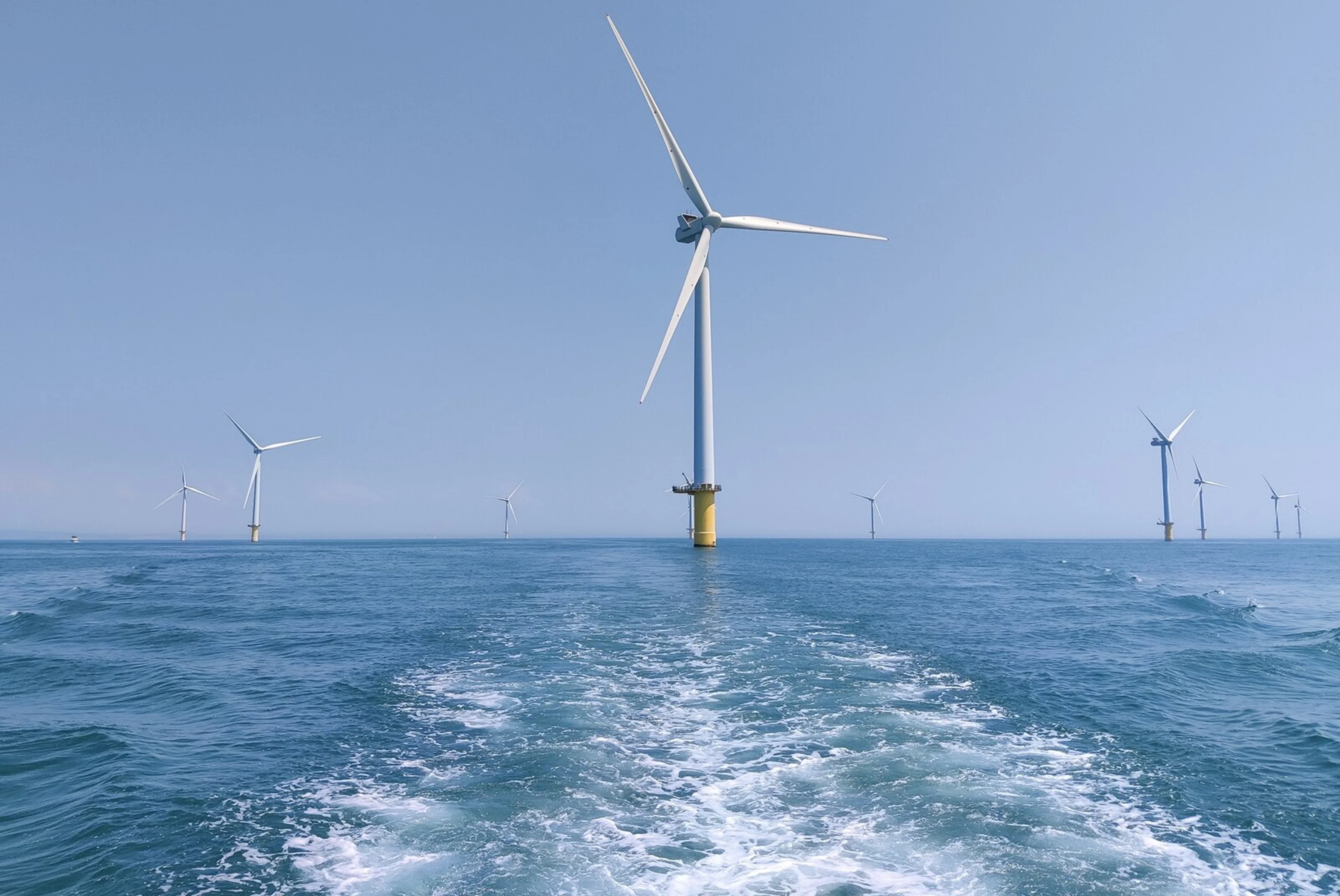
The Rampion Offshore Wind Farm is located off the coast of Sussex, England. The UK is a global leader in offshore wind energy production – and this opens up opportunities for technical and commercial cooperation with Brazil. Photo: Mat Fascione
Structural challenges for the energy transition
Despite progress in public policy and growing international interest, Brazil’s energy transition still faces significant obstacles. One of the main challenges has to do with the infrastructure needed to connect new energy sources to consumption centres and industrial supply chains. Much of the country’s potential for generating renewable energy, particularly wind and solar, is concentrated in regions far from major industrial hubs, thus requiring significant investment in power transmission and energy logistics.
“Brazil’s biggest challenge today is perhaps neither regulatory nor financial, but one of infrastructure,” says Sávia Gavazza of the Ministry of Finance. “We need to ensure that renewable energy production can reach consumption centres and the new, emerging industries.”
According to Carlos Colombo, programme director at the Secretariat for Economic Reforms, expanding the transmission grid and integrating new industrial hubs with clean energy production will be essential in transforming Brazil’s energy potential into economic competitiveness. “Brazil has an enormous capacity for generating renewable energy, but we need to expand the infrastructure to connect this production to the regions that have higher industrial demand,” he says.
In a world seeking to reduce its dependence on fossil fuels, the energy transition is no longer merely an environmental or diplomatic priority: it has become a matter of development and social protection. In the face of frequent floods, prolonged droughts, and forest fires, accelerating the decarbonisation of the economy means more than just meeting international climate goals: for Brazil, this is an opportunity to protect vulnerable populations, preserve strategic biomes, and transform a natural advantage into economic leadership.
This story was produced with support from the UK government’s International Climate Finance (ICF) programme, through an institutional partnership with the British Embassy in Brazil. This is branded content, developed by Mata N'Ativa based on research and interviews.
GLOSSARY
Biomass
Organic matter used to generate energy, such as agricultural and forestry residues
Electricity mix
The set of sources used to generate electricity in a country
Greenhouse gases
Gases that trap heat in the atmosphere, such as carbon dioxide, and cause global warming
Low-carbon technologies
Solutions that emit little or no carbon dioxide in energy production
Fossil fuels
Sources of polluting energy, such as oil, coal, and natural gas
Industrial Revolution
Period of major economic and technological transformation that began in England in the second half of the 18th century. It marked the replacement of manual labour by machines, with an intensive use of coal and, later, oil
Net emissions target
The objective of balancing the amount of greenhouse gases that a country, company or sector emits with the amount it manages to remove from the atmosphere or offset through such actions as reforestation and carbon capture
Decarbonisation
The reduction of carbon emissions in the economy, through various measures such as replacing fossil fuels with clean energy and increasing industrial and energy efficiency
Low-carbon hydrogen
Produced through water electrolysis (using electricity from renewable sources to separate hydrogen and oxygen molecules), it is a strategic fuel in the energy transition
2030 Agenda
The United Nations (UN) global plan for sustainable development, with actions planned up until 2030
Sustainable Development Goals (SDGs)
17 global goals established by the United Nations (UN) to guide countries, businesses and society in the pursuit of a fairer society that protects the environment
Electrolyzers
Equipment that produces hydrogen using electricity
Nationally Determined Contribution (NDC)
Climate targets to which each country commits at the United Nations (UN) in order to reduce greenhouse gas emissions
Offshore wind
Generation of electricity from wind turbines installed offshore
Bioeconomy
Economy based on the sustainable use of biological resources
Net-zero
When a country, company, or sector’s emissions are fully offset by actions that remove carbon from the atmosphere, such as reforestation, carbon capture, or low-carbon technologies
Regulatory instruments
Rules and policies governing various sectors, such as the energy sector
Regulatory framework
Set of laws and regulations that govern a sector, such as the energy sector, for example
Energy transition
The process of replacing polluting energy sources, such as coal and oil, with clean and renewable sources, such as solar, wind, hydroelectric, and low-carbon hydrogen
Biofuels
Fuels made from organic matter, such as ethanol and biodiesel
Energy-intensive
Industrial sectors that consume large amounts of energy
