Mata Nativa Logo
Branded ContentConteúdo de Marca

This story was sponsored by Instituto Tecnológico Vale (ITV). Mata N'Ativa's work focuses on branded content that has concrete and verifiable effects.

Native bees increase the production of açaí and other iconic Amazonian fruits
ITACAIÚNAS RIVER BASIN

Native bees increase the production of açaí and other iconic Amazonian fruits

Research by the Vale Institute of Technology (ITV) and partner institutions – such as CNPq, CAPES, and Embrapa – assesses the influence of these insects on agricultural production, their main threats, and the importance of native bee breeding and management activities. The studies conducted in the Itacaiúnas river basin can indicate ways to protect these insects in various territories.

Why is it important to tell this story?

A study by the Vale Institute of Technology (ITV) indicates that Pará benefits by almost R$ 5.6 billion per year from pollination services, equivalent to a third of its agricultural production. However, deforestation and climate change threaten bees. Understanding these insects and the services they provide is a way to encourage their protection.

Partnerships and collaborations

ITV's studies on bees and pollination are supported by CNPq, CAPES, and the Brazilian Association for the Study of Bees, and are developed within the Brazilian Network of Plant-Pollinator Interactions. There is also a partnership with the Federal University of Goiás and participation from the Emílio Goeldi Museum of Pará and Embrapa Amazônia Oriental.

Mata N'Ativa Glossary

We work for access to scientific knowledge. Be sure to explore the glossary at the end of the story to get a clearer understanding of each of the concepts covered in the text!

Access Glossary

11/10/2025By: Gabriel AlvesIllustrations: Luiz Iria
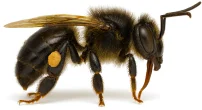
Illustration of a native Plebeia minima bee
SCIENTIFIC NAME
Melipona seminigra pernigra
POPULAR NAMES
Uruçu-boca-de-renda, uruçu-preta
SIZE
Medium
POLLINATES
Murici, cajá, annatto, among others
11/10/2025By: Gabriel AlvesIllustrations: Luiz Iria

Raised by her grandparents in Tocantins, when the state was still part of Goiás, farmer Rosemir Ferreira, known as Rose, moved to Parauapebas, in the Itacaiúnas river basin, Pará, when she turned 19. In many ways, it would be a transformative change in her life. The young woman would finally live with her parents, who had long occupied an area received from the Executive Group of the Araguaia-Tocantins Lands (Getat), a federal body created in 1980 by the military government to accelerate and regulate the region's occupation.

Rose's parents migrated to Pará with the intention of settling on new land and building a future. Despite receiving a property with virgin forest, the policies of the time and necessity led them to deforest the area to plant short-cycle temporary crops like rice, corn, cassava, and beans. But her father, Jorge, always nurtured the desire to reforest the farm, and he worked hard planting Brazil nut trees, balata trees (which produce balata, a type of latex), and other species, in addition to starting beekeeping. Gradually, this agroecosystem brought the forest back. “He argued that if he had destroyed it one day, he would do his part to regenerate it,” says Rose.

With the legacy left by her father, Rose followed the same path: conservation of the property and the bioeconomy emerged as a personal and professional horizon. Today, alongside her mother, Maria de Fátima, and her three teenage children, Rose is dedicated to beekeeping (the raising of the popular Apis mellifera, the Africanized bee) for the commercial production of honey, and also to meliponiculture (the raising of stingless bees), involving species like abelha-canudo-preta (Scaptotrigona postica), tubi (Scaptotrigona tubiba), uruçu-boca-de-renda (Melipona seminigra), uruçu-cinzenta (Melipona fasciculata), and iraí (Nannotrigona punctata). "With the meliponines, I only work with pollination, selling or renting hives to partners," she explains.

While honey production by Apis mellifera is more abundant, meliponines, also known as indigenous bees, stand out for the honey they produce, which has a rich diversity of flavors and high gastronomic quality.

There are also other important nuances in the ecosystem services – the ways in which we benefit directly or indirectly from nature – provided by bees. "Honey production usually gets more attention, but the economic contribution of bees as agricultural pollinators is of global importance," explains biologist and ecologist Tereza Giannini, a specialist in biodiversity analysis and insect-plant interaction and a researcher at ITV.

Raised by her grandparents in Tocantins, when the state was still part of Goiás, farmer Rosemir Ferreira, known as Rose, moved to Parauapebas, in the Itacaiúnas river basin, Pará, when she turned 19. In many ways, it would be a transformative change in her life. The young woman would finally live with her parents, who had long occupied an area received from the Executive Group of the Araguaia-Tocantins Lands (Getat), a federal body created in 1980 by the military government to accelerate and regulate the region's occupation.

Rose's parents migrated to Pará with the intention of settling on new land and building a future. Despite receiving a property with virgin forest, the policies of the time and necessity led them to deforest the area to plant short-cycle temporary crops like rice, corn, cassava, and beans. But her father, Jorge, always nurtured the desire to reforest the farm, and he worked hard planting Brazil nut trees, balata trees (which produce balata, a type of latex), and other species, in addition to starting beekeeping. Gradually, this agroecosystem brought the forest back. “He argued that if he had destroyed it one day, he would do his part to regenerate it,” says Rose.

With the legacy left by her father, Rose followed the same path: conservation of the property and the bioeconomy emerged as a personal and professional horizon. Today, alongside her mother, Maria de Fátima, and her three teenage children, Rose is dedicated to beekeeping (the raising of the popular Apis mellifera, the Africanized bee) for the commercial production of honey, and also to meliponiculture (the raising of stingless bees), involving species like abelha-canudo-preta (Scaptotrigona postica), tubi (Scaptotrigona tubiba), uruçu-boca-de-renda (Melipona seminigra), uruçu-cinzenta (Melipona fasciculata), and iraí (Nannotrigona punctata). "With the meliponines, I only work with pollination, selling or renting hives to partners," she explains.

While honey production by Apis mellifera is more abundant, meliponines, also known as indigenous bees, stand out for the honey they produce, which has a rich diversity of flavors and high gastronomic quality.

There are also other important nuances in the ecosystem services – the ways in which we benefit directly or indirectly from nature – provided by bees. "Honey production usually gets more attention, but the economic contribution of bees as agricultural pollinators is of global importance," explains biologist and ecologist Tereza Giannini, a specialist in biodiversity analysis and insect-plant interaction and a researcher at ITV.

Illustration of a native Lestrimelitta limao bee
SCIENTIFIC NAME
Scaptotrigona postica
POPULAR NAMES
Abelha-canudo-preta
SIZE
Small
POLLINATES
Murici, cajá, coffee, açaí, among others
Illustration of a native Plebeia minima bee
SCIENTIFIC NAME
Melipona seminigra pernigra
POPULAR NAMES
Uruçu-boca-de-renda, uruçu-preta
SIZE
Medium
POLLINATES
Murici, cajá, annatto, among others
Illustration of a native Lestrimelitta limao bee
SCIENTIFIC NAME
Scaptotrigona postica
POPULAR NAMES
Abelha-canudo-preta
SIZE
Small
POLLINATES
Murici, cajá, coffee, açaí, among others
Illustration of a native Plebeia minima bee
SCIENTIFIC NAME
Melipona seminigra pernigra
POPULAR NAMES
Uruçu-boca-de-renda, uruçu-preta
SIZE
Medium
POLLINATES
Murici, cajá, annatto, among others
Illustration of a native Lestrimelitta limao bee
SCIENTIFIC NAME
Scaptotrigona postica
POPULAR NAMES
Abelha-canudo-preta
SIZE
Small
POLLINATES
Murici, cajá, coffee, açaí, among others
11/10/2025By: Gabriel AlvesIllustrations: Luiz Iria
Illustration of a native Plebeia minima bee
SCIENTIFIC NAME
Melipona seminigra pernigra
POPULAR NAMES
Uruçu-boca-de-renda, uruçu-preta
SIZE
Medium
POLLINATES
Murici, cajá, annatto, among others

Raised by her grandparents in Tocantins, when the state was still part of Goiás, farmer Rosemir Ferreira, known as Rose, moved to Parauapebas, in the Itacaiúnas river basin, Pará, when she turned 19. In many ways, it would be a transformative change in her life. The young woman would finally live with her parents, who had long occupied an area received from the Executive Group of the Araguaia-Tocantins Lands (Getat), a federal body created in 1980 by the military government to accelerate and regulate the region's occupation.

Rose's parents migrated to Pará with the intention of settling on new land and building a future. Despite receiving a property with virgin forest, the policies of the time and necessity led them to deforest the area to plant short-cycle temporary crops like rice, corn, cassava, and beans. But her father, Jorge, always nurtured the desire to reforest the farm, and he worked hard planting Brazil nut trees, balata trees (which produce balata, a type of latex), and other species, in addition to starting beekeeping. Gradually, this agroecosystem brought the forest back. “He argued that if he had destroyed it one day, he would do his part to regenerate it,” says Rose.

Illustration of a native Lestrimelitta limao bee
SCIENTIFIC NAME
Scaptotrigona postica
POPULAR NAMES
Abelha-canudo-preta
SIZE
Small
POLLINATES
Murici, cajá, coffee, açaí, among others

With the legacy left by her father, Rose followed the same path: conservation of the property and the bioeconomy emerged as a personal and professional horizon. Today, alongside her mother, Maria de Fátima, and her three teenage children, Rose is dedicated to beekeeping (the raising of the popular Apis mellifera, the Africanized bee) for the commercial production of honey, and also to meliponiculture (the raising of stingless bees), involving species like abelha-canudo-preta (Scaptotrigona postica), tubi (Scaptotrigona tubiba), uruçu-boca-de-renda (Melipona seminigra), uruçu-cinzenta (Melipona fasciculata), and iraí (Nannotrigona punctata). "With the meliponines, I only work with pollination, selling or renting hives to partners," she explains.

While honey production by Apis mellifera is more abundant, meliponines, also known as indigenous bees, stand out for the honey they produce, which has a rich diversity of flavors and high gastronomic quality.

There are also other important nuances in the ecosystem services – the ways in which we benefit directly or indirectly from nature – provided by bees. "Honey production usually gets more attention, but the economic contribution of bees as agricultural pollinators is of global importance," explains biologist and ecologist Tereza Giannini, a specialist in biodiversity analysis and insect-plant interaction and a researcher at ITV.

11/10/2025By: Gabriel AlvesIllustrations: Luiz Iria

Raised by her grandparents in Tocantins, when the state was still part of Goiás, farmer Rosemir Ferreira, known as Rose, moved to Parauapebas, in the Itacaiúnas river basin, Pará, when she turned 19. In many ways, it would be a transformative change in her life. The young woman would finally live with her parents, who had long occupied an area received from the Executive Group of the Araguaia-Tocantins Lands (Getat), a federal body created in 1980 by the military government to accelerate and regulate the region's occupation.

Illustration of a native Plebeia minima bee
SCIENTIFIC NAME
Melipona seminigra pernigra
POPULAR NAMES
Uruçu-boca-de-renda, uruçu-preta
SIZE
Medium
POLLINATES
Murici, cajá, annatto, among others

Rose's parents migrated to Pará with the intention of settling on new land and building a future. Despite receiving a property with virgin forest, the policies of the time and necessity led them to deforest the area to plant short-cycle temporary crops like rice, corn, cassava, and beans. But her father, Jorge, always nurtured the desire to reforest the farm, and he worked hard planting Brazil nut trees, balata trees (which produce balata, a type of latex), and other species, in addition to starting beekeeping. Gradually, this agroecosystem brought the forest back. “He argued that if he had destroyed it one day, he would do his part to regenerate it,” says Rose.

Illustration of a native Lestrimelitta limao bee
SCIENTIFIC NAME
Scaptotrigona postica
POPULAR NAMES
Abelha-canudo-preta
SIZE
Small
POLLINATES
Murici, cajá, coffee, açaí, among others

With the legacy left by her father, Rose followed the same path: conservation of the property and the bioeconomy emerged as a personal and professional horizon. Today, alongside her mother, Maria de Fátima, and her three teenage children, Rose is dedicated to beekeeping (the raising of the popular Apis mellifera, the Africanized bee) for the commercial production of honey, and also to meliponiculture (the raising of stingless bees), involving species like abelha-canudo-preta (Scaptotrigona postica), tubi (Scaptotrigona tubiba), uruçu-boca-de-renda (Melipona seminigra), uruçu-cinzenta (Melipona fasciculata), and iraí (Nannotrigona punctata). "With the meliponines, I only work with pollination, selling or renting hives to partners," she explains.

While honey production by Apis mellifera is more abundant, meliponines, also known as indigenous bees, stand out for the honey they produce, which has a rich diversity of flavors and high gastronomic quality.

There are also other important nuances in the ecosystem services – the ways in which we benefit directly or indirectly from nature – provided by bees. "Honey production usually gets more attention, but the economic contribution of bees as agricultural pollinators is of global importance," explains biologist and ecologist Tereza Giannini, a specialist in biodiversity analysis and insect-plant interaction and a researcher at ITV.

Image of nectar from the Carajás flower

By feeding on the nectar of the Carajás flower, the stingless bee promotes the pollination of the flora. This service, pollination, contributes almost R$ 5.6 billion per year to the economy of the state of Pará. PHOTO: Miguel Aun

Giannini is one of the authors of a study published in the scientific journal Neotropical Entomology that quantified the work of bees: the state of Pará benefits by almost R$ 5.6 billion per year from pollination services, about a third of its total agricultural production. “Not all plants produce flowers, but of those that do, especially here in the tropics, most need pollinators. And bees are the most important pollinators in nature.”

For a long time, it was believed that palm trees, such as açaí and oil palm, were pollinated by the wind. That was not true. Studies have shown that in the Amazon biome, açaí, taperebá, cupuaçu, and other iconic forest crops are heavily dependent on insects like bees – which, unlike other pollinators such as beetles and small flies, can be managed by humans.

The work of bees sustains entire ecosystems and ensures the diversity of the plant world. The insects transport pollen (the male sexual gamete of plants) from one flower to another, ensuring the reproduction of the species. Other important animals perform this type of service, such as bats, birds, flies, and opossums, “but bees are the absolute champions, especially when we talk about agriculture,” adds Giannini. “These little creatures are constantly doing this invisible work. Without them, our refrigerators would be much duller. Most of the foods we consume that are rich in vitamins and minerals, like fruits and vegetables, for example, depend on bees,” she explains.

According to Giannini, these insects are essential, even for maintaining the cultural identity of different communities. “We conducted a survey of nearly 300 plants used by traditional Amazonian communities, and many of them depend on bees. The value of these plant species is immense. And it's not just an economic value; there is also a high cultural value embedded,” she explains.

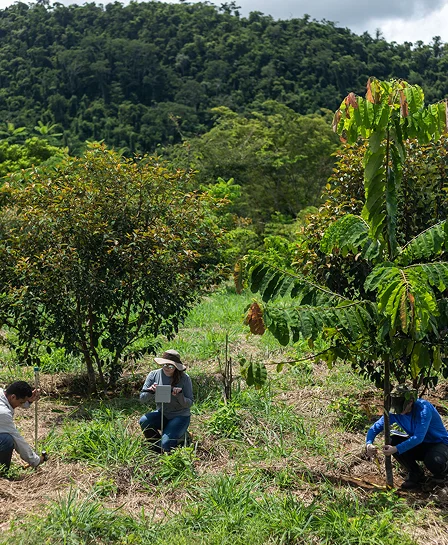
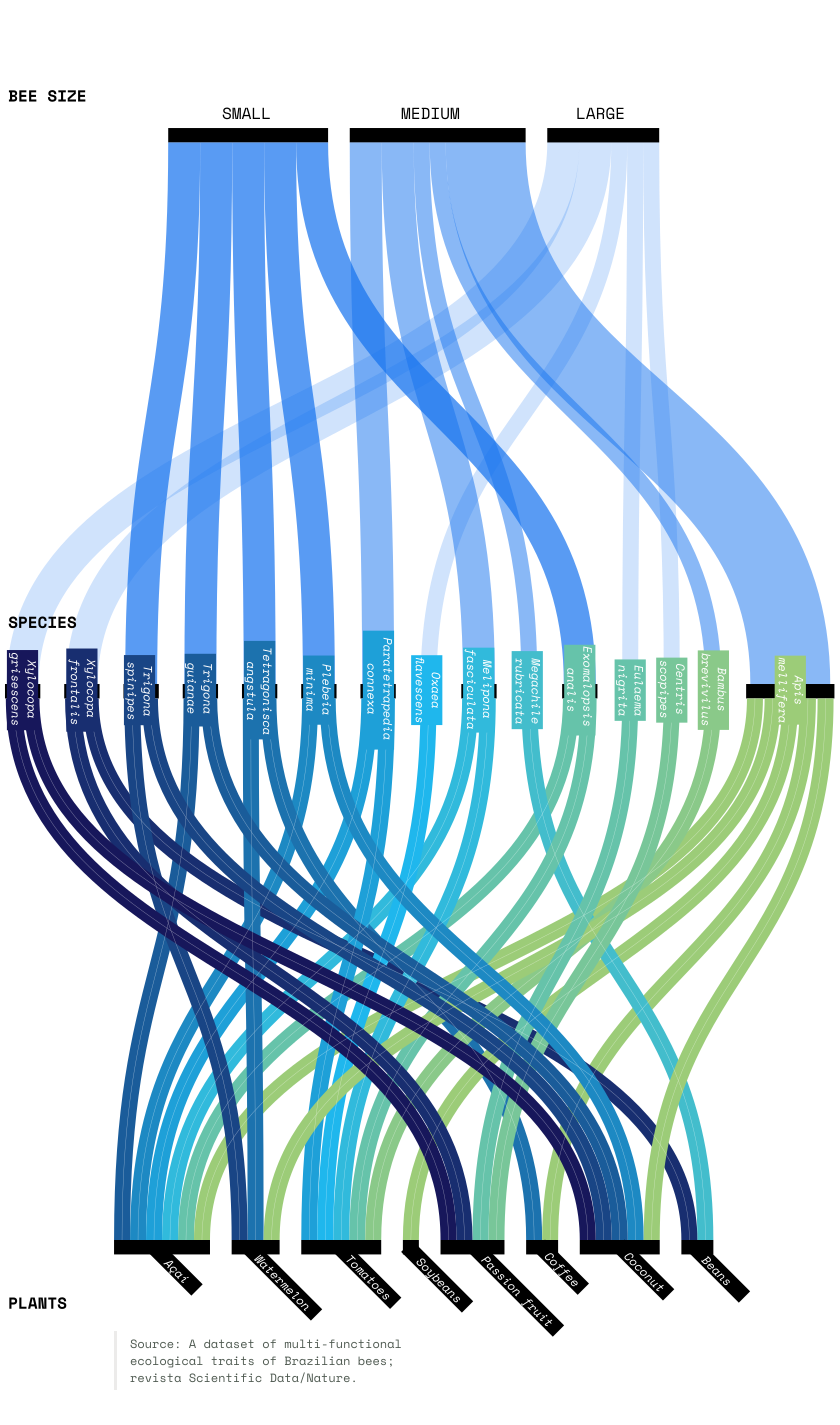
The presence of native bees, which occur naturally in the Amazon biome, has proven to be especially relevant in açaí groves. Marcia Maués, from Embrapa Amazônia Oriental, says that in an experiment, researchers cultivated açaí with and without bee colonies present, and considering the native vegetation nearby. The result was clear. “If there is a forest nearby, the açaí tree produces up to five times more than if it is near altered areas. When the açaí is near stretches without native vegetation, we introduce managed bees and get an increase in pollination – but it is never the same as what occurs near forests. That's where you see the value of the preserved forest,” says Maués.

Jamille Veiga, a specialist in bee behavior and a scholarship researcher at ITV, adds: “Bees don't pollinate on purpose. There are many individuals looking for food to meet the demand of the family, the colony, and from flower to flower, they make so many journeys and crossings. In doing so, they end up benefiting plant populations and an entire production chain.” Bees do not always seek food from just one plant species. However, the relationship is especially beneficial for the plant when the result of pollination is evaluated.

Giannini is one of the authors of a study published in the scientific journal Neotropical Entomology that quantified the work of bees: the state of Pará benefits by almost R$ 5.6 billion per year from pollination services, about a third of its total agricultural production. “Not all plants produce flowers, but of those that do, especially here in the tropics, most need pollinators. And bees are the most important pollinators in nature.”

For a long time, it was believed that palm trees, such as açaí and oil palm, were pollinated by the wind. That was not true. Studies have shown that in the Amazon biome, açaí, taperebá, cupuaçu, and other iconic forest crops are heavily dependent on insects like bees – which, unlike other pollinators such as beetles and small flies, can be managed by humans.

The work of bees sustains entire ecosystems and ensures the diversity of the plant world. The insects transport pollen (the male sexual gamete of plants) from one flower to another, ensuring the reproduction of the species. Other important animals perform this type of service, such as bats, birds, flies, and opossums, “but bees are the absolute champions, especially when we talk about agriculture,” adds Giannini. “These little creatures are constantly doing this invisible work. Without them, our refrigerators would be much duller. Most of the foods we consume that are rich in vitamins and minerals, like fruits and vegetables, for example, depend on bees,” she explains.

According to Giannini, these insects are essential, even for maintaining the cultural identity of different communities. “We conducted a survey of nearly 300 plants used by traditional Amazonian communities, and many of them depend on bees. The value of these plant species is immense. And it's not just an economic value; there is also a high cultural value embedded,” she explains.

The presence of native bees, which occur naturally in the Amazon biome, has proven to be especially relevant in açaí groves. Marcia Maués, from Embrapa Amazônia Oriental, says that in an experiment, researchers cultivated açaí with and without bee colonies present, and considering the native vegetation nearby. The result was clear. “If there is a forest nearby, the açaí tree produces up to five times more than if it is near altered areas. When the açaí is near stretches without native vegetation, we introduce managed bees and get an increase in pollination – but it is never the same as what occurs near forests. That's where you see the value of the preserved forest,” says Maués.

Jamille Veiga, a specialist in bee behavior and a scholarship researcher at ITV, adds: “Bees don't pollinate on purpose. There are many individuals looking for food to meet the demand of the family, the colony, and from flower to flower, they make so many journeys and crossings. In doing so, they end up benefiting plant populations and an entire production chain.” Bees do not always seek food from just one plant species. However, the relationship is especially beneficial for the plant when the result of pollination is evaluated.

Illustration of a native Bombus terrestris bee
SCIENTIFIC NAME
Melipona fasciculata
POPULAR NAMES
Uruçu-cinzenta, tiúba
SIZE
Medium
POLLINATES
Tomato, cassava, among others
Illustration of a native Bombus terrestris bee
SCIENTIFIC NAME
Melipona fasciculata
POPULAR NAMES
Uruçu-cinzenta, tiúba
SIZE
Medium
POLLINATES
Tomato, cassava, among others
Illustration of a native Bombus terrestris bee
SCIENTIFIC NAME
Melipona fasciculata
POPULAR NAMES
Uruçu-cinzenta, tiúba
SIZE
Medium
POLLINATES
Tomato, cassava, among others
Illustration of a native Bombus terrestris bee
SCIENTIFIC NAME
Melipona fasciculata
POPULAR NAMES
Uruçu-cinzenta, tiúba
SIZE
Medium
POLLINATES
Tomato, cassava, among others

Giannini is one of the authors of a study published in the scientific journal Neotropical Entomology that quantified the work of bees: the state of Pará benefits by almost R$ 5.6 billion per year from pollination services, about a third of its total agricultural production. “Not all plants produce flowers, but of those that do, especially here in the tropics, most need pollinators. And bees are the most important pollinators in nature.”

For a long time, it was believed that palm trees, such as açaí and oil palm, were pollinated by the wind. That was not true. Studies have shown that in the Amazon biome, açaí, taperebá, cupuaçu, and other iconic forest crops are heavily dependent on insects like bees – which, unlike other pollinators such as beetles and small flies, can be managed by humans.

The work of bees sustains entire ecosystems and ensures the diversity of the plant world. The insects transport pollen (the male sexual gamete of plants) from one flower to another, ensuring the reproduction of the species. Other important animals perform this type of service, such as bats, birds, flies, and opossums, “but bees are the absolute champions, especially when we talk about agriculture,” adds Giannini. “These little creatures are constantly doing this invisible work. Without them, our refrigerators would be much duller. Most of the foods we consume that are rich in vitamins and minerals, like fruits and vegetables, for example, depend on bees,” she explains.

According to Giannini, these insects are essential, even for maintaining the cultural identity of different communities. “We conducted a survey of nearly 300 plants used by traditional Amazonian communities, and many of them depend on bees. The value of these plant species is immense. And it's not just an economic value; there is also a high cultural value embedded,” she explains.

The presence of native bees, which occur naturally in the Amazon biome, has proven to be especially relevant in açaí groves. Marcia Maués, from Embrapa Amazônia Oriental, says that in an experiment, researchers cultivated açaí with and without bee colonies present, and considering the native vegetation nearby. The result was clear. “If there is a forest nearby, the açaí tree produces up to five times more than if it is near altered areas. When the açaí is near stretches without native vegetation, we introduce managed bees and get an increase in pollination – but it is never the same as what occurs near forests. That's where you see the value of the preserved forest,” says Maués.

Jamille Veiga, a specialist in bee behavior and a scholarship researcher at ITV, adds: “Bees don't pollinate on purpose. There are many individuals looking for food to meet the demand of the family, the colony, and from flower to flower, they make so many journeys and crossings. In doing so, they end up benefiting plant populations and an entire production chain.” Bees do not always seek food from just one plant species. However, the relationship is especially beneficial for the plant when the result of pollination is evaluated.

Giannini is one of the authors of a study published in the scientific journal Neotropical Entomology that quantified the work of bees: the state of Pará benefits by almost R$ 5.6 billion per year from pollination services, about a third of its total agricultural production. “Not all plants produce flowers, but of those that do, especially here in the tropics, most need pollinators. And bees are the most important pollinators in nature.”

Illustration of a native Bombus terrestris bee
SCIENTIFIC NAME
Melipona fasciculata
POPULAR NAMES
Uruçu-cinzenta, tiúba
SIZE
Medium
POLLINATES
Tomato, cassava, among others

For a long time, it was believed that palm trees, such as açaí and oil palm, were pollinated by the wind. That was not true. Studies have shown that in the Amazon biome, açaí, taperebá, cupuaçu, and other iconic forest crops are heavily dependent on insects like bees – which, unlike other pollinators such as beetles and small flies, can be managed by humans.

The work of bees sustains entire ecosystems and ensures the diversity of the plant world. The insects transport pollen (the male sexual gamete of plants) from one flower to another, ensuring the reproduction of the species. Other important animals perform this type of service, such as bats, birds, flies, and opossums, “but bees are the absolute champions, especially when we talk about agriculture,” adds Giannini. “These little creatures are constantly doing this invisible work. Without them, our refrigerators would be much duller. Most of the foods we consume that are rich in vitamins and minerals, like fruits and vegetables, for example, depend on bees,” she explains.

According to Giannini, these insects are essential, even for maintaining the cultural identity of different communities. “We conducted a survey of nearly 300 plants used by traditional Amazonian communities, and many of them depend on bees. The value of these plant species is immense. And it's not just an economic value; there is also a high cultural value embedded,” she explains.

The presence of native bees, which occur naturally in the Amazon biome, has proven to be especially relevant in açaí groves. Marcia Maués, from Embrapa Amazônia Oriental, says that in an experiment, researchers cultivated açaí with and without bee colonies present, and considering the native vegetation nearby. The result was clear. “If there is a forest nearby, the açaí tree produces up to five times more than if it is near altered areas. When the açaí is near stretches without native vegetation, we introduce managed bees and get an increase in pollination – but it is never the same as what occurs near forests. That's where you see the value of the preserved forest,” says Maués.

Jamille Veiga, a specialist in bee behavior and a scholarship researcher at ITV, adds: “Bees don't pollinate on purpose. There are many individuals looking for food to meet the demand of the family, the colony, and from flower to flower, they make so many journeys and crossings. In doing so, they end up benefiting plant populations and an entire production chain.” Bees do not always seek food from just one plant species. However, the relationship is especially beneficial for the plant when the result of pollination is evaluated.

In Carajás National Forest, researchers from the Vale Technological Institute identified

Bee species in Brazil
0%
Bee species registered in Pará
0%
This is the value that pollination represents for the state's annual agricultural production (R$ 5.6 billion per year)
Illustration of a native Melipona fasciculata bee
SCIENTIFIC NAME
Nannotrigona punctata
POPULAR NAMES
Iraí
SIZE
Small
POLLINATES
Murici, guava, rambutan, açaí, among others
Illustration of a native Melipona fasciculata bee

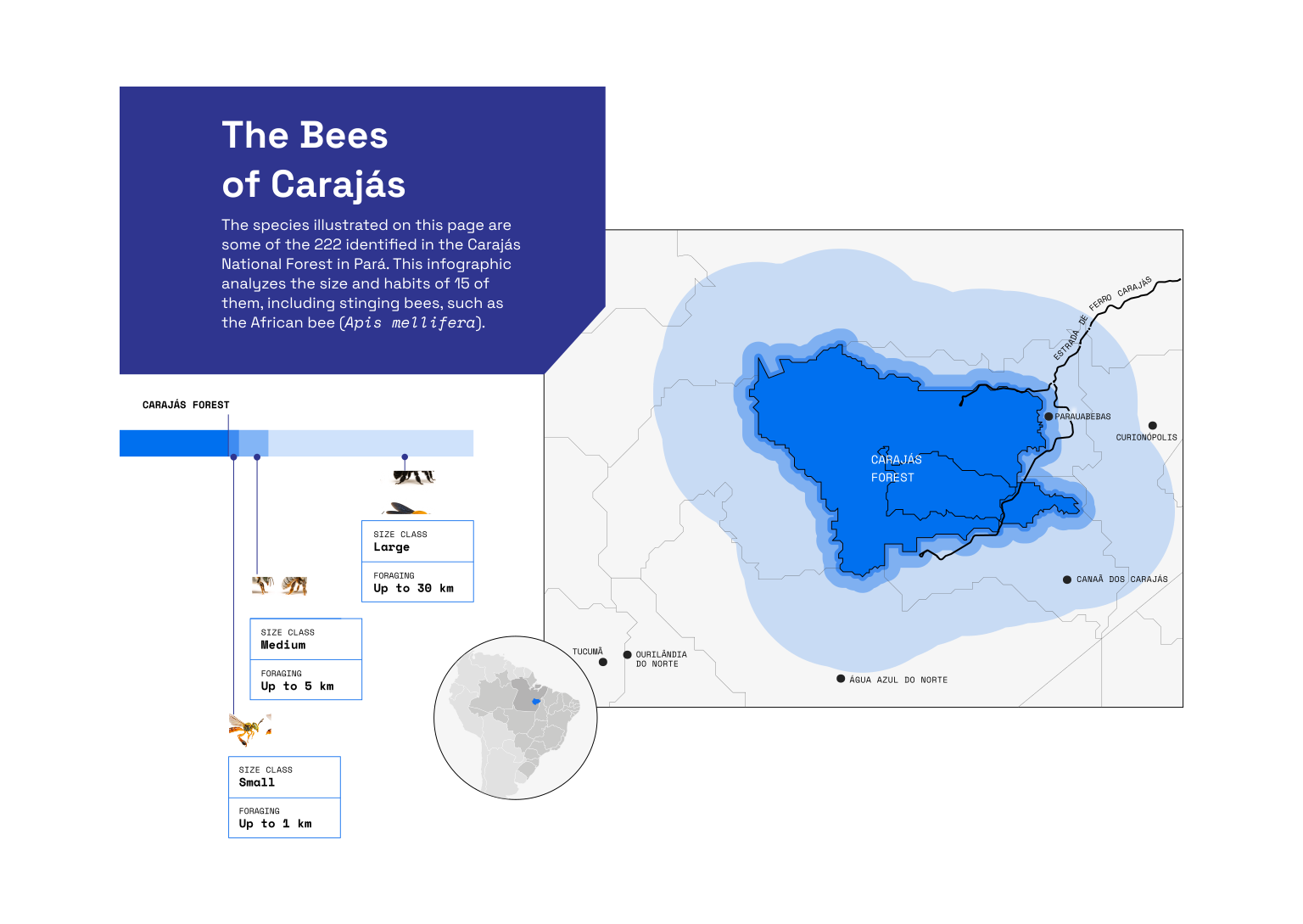
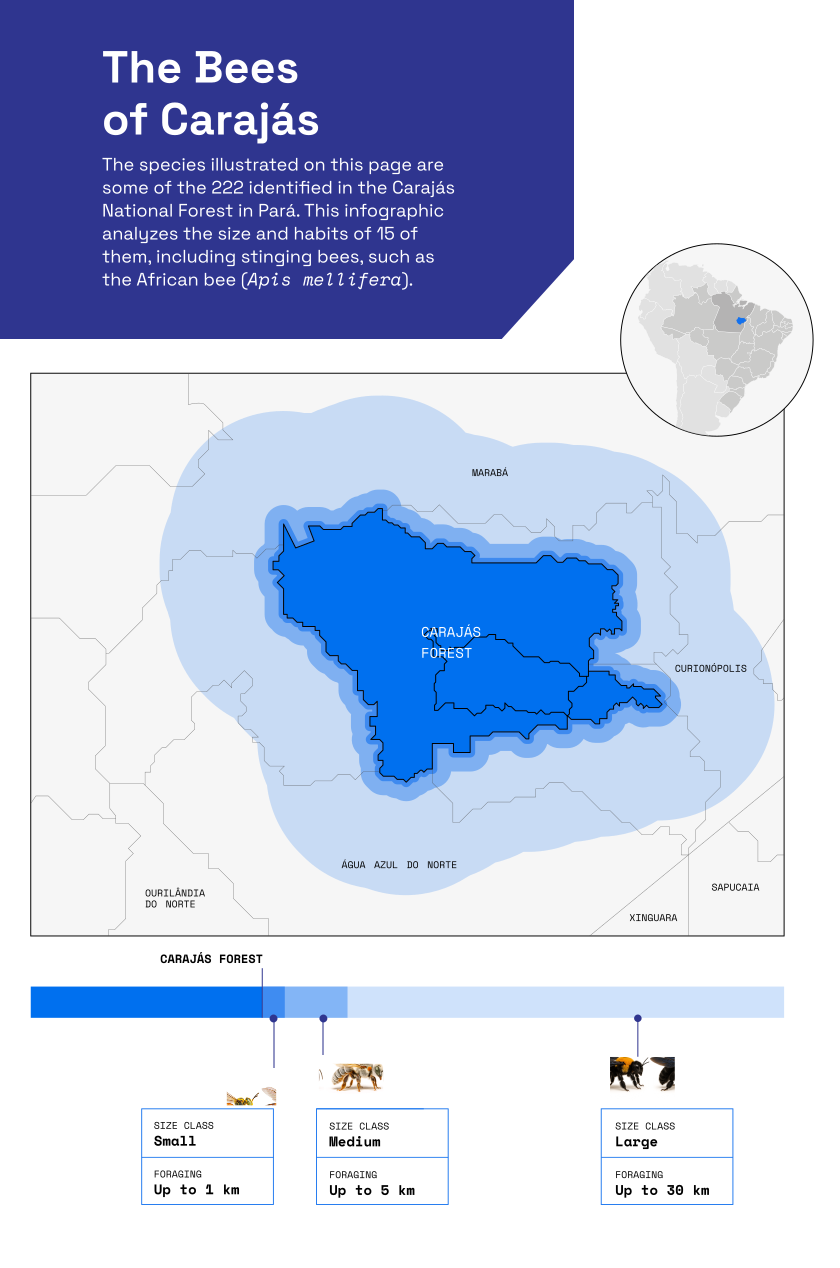
A healthy interaction requires a combination of factors, such as the appropriate size of the bees in relation to their preferred flowers. There also needs to be a “fit” between the insect and the flower to allow the pollen to adhere to the insects' body hairs. When visiting a second flower of the same species, the bee touches the stigma, the part of the female reproductive system, transferring the pollen grains and fertilizing the flower. This is what will give rise to seeds and fruits. Small bees, like the smallest species of meliponines, rarely travel more than 1 kilometer in search of food; the larger ones can go further.

Among the more than 20,000 species of bees in the world, 600 belong to the group of stingless bees. About 50% of this diversity has been cataloged in Brazil (more than 250 species), with 120 occurring in the state of Pará. With the aim of preserving meliponines and enhancing the ecosystem services they provide, ITV inaugurated the Carajás Bee Biofactory, within the Carajás National Forest (Flona), where Vale carries out mining activities. “The project has already rescued more than 120 nests of 26 species of stingless bees. There were already surveys that recorded more than 80 species in the Carajás National Forest,” explains Veiga.

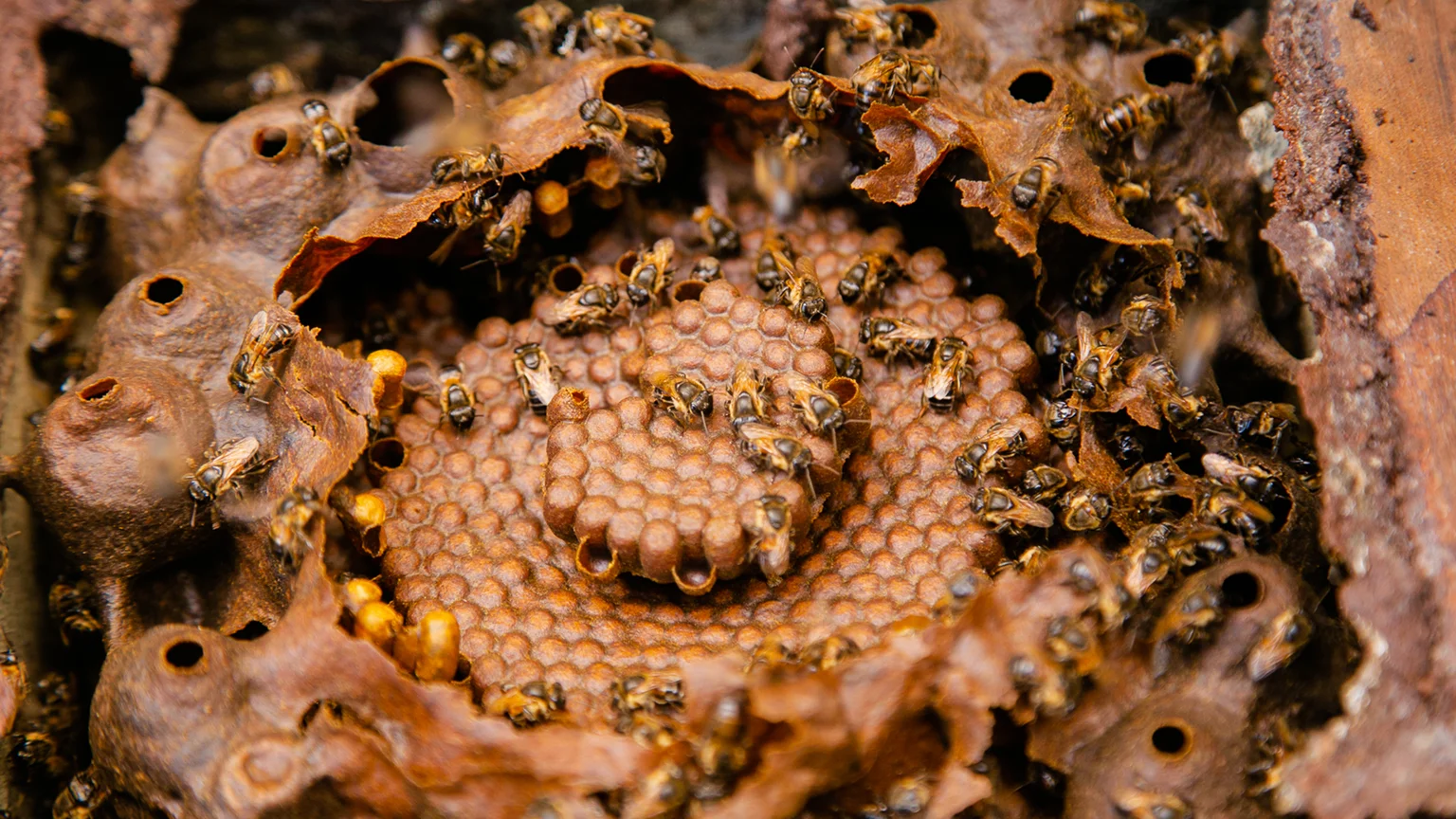
With the help of materials developed by ITV (a guide and a course on rescuing and managing stingless bees), local teams were trained to identify nests in areas chosen for vegetation suppression. It is meticulous work: the tree is cut carefully, the intact parts of the nest are transferred to a management box, and finally, the queen and all the worker bees are accommodated in the box, which, after being sealed, is transported to the biofactory's meliponary, where the bees are kept. The colonies can be multiplied and later distributed to breeders in the region – as is the case with Rosemir Ferreira, for example.

“In the context of meliponiculture, we need to ensure food, shade, and fresh water for the bees. And this is done by choosing a good green area to establish the meliponary (stingless bee breeding ground). Otherwise, they will not be able to sustain themselves, even with management. The good news is that those who raise bees usually have a green area and are concerned with growing flowering plants for them,” explains Veiga. Part of the nests rescued in the Carajás National Forest were donated to 37 rural landowners. The donated species correspond to the most commonly bred in the region: the canudo-preta (Scaptotrigona spp.) and the uruçu-boca-de-renda (Melipona seminigra).

By the way, here's a curious fact: many popular names for bee species come from their characteristics and colors, as well as the shape of their nests. Boca-de-renda (lace-mouth), for example, is justified by the entrance to the nest tunnel, which has a lace-like appearance. The tunnel of the canudo-preta (black-straw) bee's nest looks like a straw, or a pipe. In addition to the potential for producing high-quality types of honey, these species of stingless bees can increase the pollination of different fruit plants typically cultivated on rural properties in the Amazon, such as açaí, cupuaçu, taperebá, and jambo.
A healthy interaction requires a combination of factors, such as the appropriate size of the bees in relation to their preferred flowers. There also needs to be a “fit” between the insect and the flower to allow the pollen to adhere to the insects' body hairs. When visiting a second flower of the same species, the bee touches the stigma, the part of the female reproductive system, transferring the pollen grains and fertilizing the flower. This is what will give rise to seeds and fruits. Small bees, like the smallest species of meliponines, rarely travel more than 1 kilometer in search of food; the larger ones can go further.

Among the more than 20,000 species of bees in the world, 600 belong to the group of stingless bees. About 50% of this diversity has been cataloged in Brazil (more than 250 species), with 120 occurring in the state of Pará. With the aim of preserving meliponines and enhancing the ecosystem services they provide, ITV inaugurated the Carajás Bee Biofactory, within the Carajás National Forest (Flona), where Vale carries out mining activities. “The project has already rescued more than 120 nests of 26 species of stingless bees. There were already surveys that recorded more than 80 species in the Carajás National Forest,” explains Veiga.

With the help of materials developed by ITV (a guide and a course on rescuing and managing stingless bees), local teams were trained to identify nests in areas chosen for vegetation suppression. It is meticulous work: the tree is cut carefully, the intact parts of the nest are transferred to a management box, and finally, the queen and all the worker bees are accommodated in the box, which, after being sealed, is transported to the biofactory's meliponary, where the bees are kept. The colonies can be multiplied and later distributed to breeders in the region – as is the case with Rosemir Ferreira, for example.

“In the context of meliponiculture, we need to ensure food, shade, and fresh water for the bees. And this is done by choosing a good green area to establish the meliponary (stingless bee breeding ground). Otherwise, they will not be able to sustain themselves, even with management. The good news is that those who raise bees usually have a green area and are concerned with growing flowering plants for them,” explains Veiga. Part of the nests rescued in the Carajás National Forest were donated to 37 rural landowners. The donated species correspond to the most commonly bred in the region: the canudo-preta (Scaptotrigona spp.) and the uruçu-boca-de-renda (Melipona seminigra).

By the way, here's a curious fact: many popular names for bee species come from their characteristics and colors, as well as the shape of their nests. Boca-de-renda (lace-mouth), for example, is justified by the entrance to the nest tunnel, which has a lace-like appearance. The tunnel of the canudo-preta (black-straw) bee's nest looks like a straw, or a pipe. In addition to the potential for producing high-quality types of honey, these species of stingless bees can increase the pollination of different fruit plants typically cultivated on rural properties in the Amazon, such as açaí, cupuaçu, taperebá, and jambo.

Illustration of a native Melipona fasciculata bee
SCIENTIFIC NAME
Nannotrigona punctata
POPULAR NAMES
Iraí
SIZE
Small
POLLINATES
Murici, guava, rambutan, açaí, among others
Illustration of a native Melipona fasciculata bee
SCIENTIFIC NAME
Nannotrigona punctata
POPULAR NAMES
Iraí
SIZE
Small
POLLINATES
Murici, guava, rambutan, açaí, among others
Illustration of a native Melipona fasciculata bee
SCIENTIFIC NAME
Nannotrigona punctata
POPULAR NAMES
Iraí
SIZE
Small
POLLINATES
Murici, guava, rambutan, açaí, among others

A healthy interaction requires a combination of factors, such as the appropriate size of the bees in relation to their preferred flowers. There also needs to be a “fit” between the insect and the flower to allow the pollen to adhere to the insects' body hairs. When visiting a second flower of the same species, the bee touches the stigma, the part of the female reproductive system, transferring the pollen grains and fertilizing the flower. This is what will give rise to seeds and fruits. Small bees, like the smallest species of meliponines, rarely travel more than 1 kilometer in search of food; the larger ones can go further.

Among the more than 20,000 species of bees in the world, 600 belong to the group of stingless bees. About 50% of this diversity has been cataloged in Brazil (more than 250 species), with 120 occurring in the state of Pará. With the aim of preserving meliponines and enhancing the ecosystem services they provide, ITV inaugurated the Carajás Bee Biofactory, within the Carajás National Forest (Flona), where Vale carries out mining activities. “The project has already rescued more than 120 nests of 26 species of stingless bees. There were already surveys that recorded more than 80 species in the Carajás National Forest,” explains Veiga.

With the help of materials developed by ITV (a guide and a course on rescuing and managing stingless bees), local teams were trained to identify nests in areas chosen for vegetation suppression. It is meticulous work: the tree is cut carefully, the intact parts of the nest are transferred to a management box, and finally, the queen and all the worker bees are accommodated in the box, which, after being sealed, is transported to the biofactory's meliponary, where the bees are kept. The colonies can be multiplied and later distributed to breeders in the region – as is the case with Rosemir Ferreira, for example.

“In the context of meliponiculture, we need to ensure food, shade, and fresh water for the bees. And this is done by choosing a good green area to establish the meliponary (stingless bee breeding ground). Otherwise, they will not be able to sustain themselves, even with management. The good news is that those who raise bees usually have a green area and are concerned with growing flowering plants for them,” explains Veiga. Part of the nests rescued in the Carajás National Forest were donated to 37 rural landowners. The donated species correspond to the most commonly bred in the region: the canudo-preta (Scaptotrigona spp.) and the uruçu-boca-de-renda (Melipona seminigra).

By the way, here's a curious fact: many popular names for bee species come from their characteristics and colors, as well as the shape of their nests. Boca-de-renda (lace-mouth), for example, is justified by the entrance to the nest tunnel, which has a lace-like appearance. The tunnel of the canudo-preta (black-straw) bee's nest looks like a straw, or a pipe. In addition to the potential for producing high-quality types of honey, these species of stingless bees can increase the pollination of different fruit plants typically cultivated on rural properties in the Amazon, such as açaí, cupuaçu, taperebá, and jambo.

A healthy interaction requires a combination of factors, such as the appropriate size of the bees in relation to their preferred flowers. There also needs to be a “fit” between the insect and the flower to allow the pollen to adhere to the insects' body hairs. When visiting a second flower of the same species, the bee touches the stigma, the part of the female reproductive system, transferring the pollen grains and fertilizing the flower. This is what will give rise to seeds and fruits. Small bees, like the smallest species of meliponines, rarely travel more than 1 kilometer in search of food; the larger ones can go further.

Illustration of a native Melipona fasciculata bee
SCIENTIFIC NAME
Nannotrigona punctata
POPULAR NAMES
Iraí
SIZE
Small
POLLINATES
Murici, guava, rambutan, açaí, among others

Among the more than 20,000 species of bees in the world, 600 belong to the group of stingless bees. About 50% of this diversity has been cataloged in Brazil (more than 250 species), with 120 occurring in the state of Pará. With the aim of preserving meliponines and enhancing the ecosystem services they provide, ITV inaugurated the Carajás Bee Biofactory, within the Carajás National Forest (Flona), where Vale carries out mining activities. “The project has already rescued more than 120 nests of 26 species of stingless bees. There were already surveys that recorded more than 80 species in the Carajás National Forest,” explains Veiga.

With the help of materials developed by ITV (a guide and a course on rescuing and managing stingless bees), local teams were trained to identify nests in areas chosen for vegetation suppression. It is meticulous work: the tree is cut carefully, the intact parts of the nest are transferred to a management box, and finally, the queen and all the worker bees are accommodated in the box, which, after being sealed, is transported to the biofactory's meliponary, where the bees are kept. The colonies can be multiplied and later distributed to breeders in the region – as is the case with Rosemir Ferreira, for example.

“In the context of meliponiculture, we need to ensure food, shade, and fresh water for the bees. And this is done by choosing a good green area to establish the meliponary (stingless bee breeding ground). Otherwise, they will not be able to sustain themselves, even with management. The good news is that those who raise bees usually have a green area and are concerned with growing flowering plants for them,” explains Veiga. Part of the nests rescued in the Carajás National Forest were donated to 37 rural landowners. The donated species correspond to the most commonly bred in the region: the canudo-preta (Scaptotrigona spp.) and the uruçu-boca-de-renda (Melipona seminigra).

By the way, here's a curious fact: many popular names for bee species come from their characteristics and colors, as well as the shape of their nests. Boca-de-renda (lace-mouth), for example, is justified by the entrance to the nest tunnel, which has a lace-like appearance. The tunnel of the canudo-preta (black-straw) bee's nest looks like a straw, or a pipe. In addition to the potential for producing high-quality types of honey, these species of stingless bees can increase the pollination of different fruit plants typically cultivated on rural properties in the Amazon, such as açaí, cupuaçu, taperebá, and jambo.

Indigenous Bees Image

The Carajás Indigenous Bee Biofactory is home to 110 of the 244 native bee species already cataloged in Brazil. PHOTO: Vale Institute of Technology

New and old threats to the forest

Illustration of a native Scaptotrigona tubiba bee
SCIENTIFIC NAME
Tetragonisca angustula
POPULAR NAMES
Jataí
SIZE
Small
POLLINATES
Coffee, watermelon, cupuaçu, among others

New and old threats to the forest

Despite the numerous pollination interactions and the diversity of bees, a threatening combination looms over the insects. “Our studies show that with climate change and deforestation, the habitats of bees in Northern Brazil may shrink. These future scenarios are worrying because if bees decrease, the agricultural system and even the local economy could be affected. Therefore, we are now focusing on better understanding this impact and possible solutions,” says Giannini.

“Our tropical bees face a challenge: they can handle a temperature variation within an optimal range [the period in which functions like reproduction and foraging reach a peak performance. If the temperature deviates from this range, this efficiency drops, potentially causing the death of the insects]. But the heat spikes that are occurring have caused a lot of stress in the colonies, with the loss of individuals,” explains Felipe Contrera, a biologist who studies the behavior of stingless bees and a professor at the Federal University of Pará (UFPA).

At the helm of the Ké Mel brand, Rosemir Ferreira says that in 2023, 5 tons of honey were collected and completely sold in the local market. But in 2024, 80% of the bees died, and production plummeted. Among the causes of the phenomenon, she also includes the use of pesticides on neighboring lands, fires, and attacks by wild animals, such as coatis and anteaters. It was possible to install screens against predators, but with regard to the other problems, it depends on changes in people's behavior.

“The practice of fire and poison, done by people without awareness, is affecting us a lot. We have already contacted the city hall and other agencies to help us in this debate, otherwise our pollinators will cease to exist,” she says. Another challenge in meliponiculture, Rose says, is the loss of swarms due to attacks by a specific stingless bee: the lemon bee (Lestrimelitta limao). “I don't know if it was the lack of food in the field or because of the application of poisons. The fight between them was big.”

With a favorable climate and a recovery of local vegetation, the expectation for 2025 was a record harvest at Ké Mel, which is not expected to happen. “There was a goal to harvest 6 tons, but unfortunately we will not reach it given this loss in the swarms. Maybe we will reach 3 tons.”

In addition to expanding production, Rose and her family intend to certify the honey so that the product can reach new markets. “We dream of putting honey in school meals,” she says. In parallel, the breeder wants to intensify her work with rural tourism, showing students and visitors how honey production works. The whole house is involved in the project. João, the eldest son, is in high school integrated with agro-industry. “What I tell him is to go, study, and come back to the base, which is what I did.”
Despite the numerous pollination interactions and the diversity of bees, a threatening combination looms over the insects. “Our studies show that with climate change and deforestation, the habitats of bees in Northern Brazil may shrink. These future scenarios are worrying because if bees decrease, the agricultural system and even the local economy could be affected. Therefore, we are now focusing on better understanding this impact and possible solutions,” says Giannini.

“Our tropical bees face a challenge: they can handle a temperature variation within an optimal range [the period in which functions like reproduction and foraging reach a peak performance. If the temperature deviates from this range, this efficiency drops, potentially causing the death of the insects]. But the heat spikes that are occurring have caused a lot of stress in the colonies, with the loss of individuals,” explains Felipe Contrera, a biologist who studies the behavior of stingless bees and a professor at the Federal University of Pará (UFPA).

At the helm of the Ké Mel brand, Rosemir Ferreira says that in 2023, 5 tons of honey were collected and completely sold in the local market. But in 2024, 80% of the bees died, and production plummeted. Among the causes of the phenomenon, she also includes the use of pesticides on neighboring lands, fires, and attacks by wild animals, such as coatis and anteaters. It was possible to install screens against predators, but with regard to the other problems, it depends on changes in people's behavior.

“The practice of fire and poison, done by people without awareness, is affecting us a lot. We have already contacted the city hall and other agencies to help us in this debate, otherwise our pollinators will cease to exist,” she says. Another challenge in meliponiculture, Rose says, is the loss of swarms due to attacks by a specific stingless bee: the lemon bee (Lestrimelitta limao). “I don't know if it was the lack of food in the field or because of the application of poisons. The fight between them was big.”

With a favorable climate and a recovery of local vegetation, the expectation for 2025 was a record harvest at Ké Mel, which is not expected to happen. “There was a goal to harvest 6 tons, but unfortunately we will not reach it given this loss in the swarms. Maybe we will reach 3 tons.”

In addition to expanding production, Rose and her family intend to certify the honey so that the product can reach new markets. “We dream of putting honey in school meals,” she says. In parallel, the breeder wants to intensify her work with rural tourism, showing students and visitors how honey production works. The whole house is involved in the project. João, the eldest son, is in high school integrated with agro-industry. “What I tell him is to go, study, and come back to the base, which is what I did.”
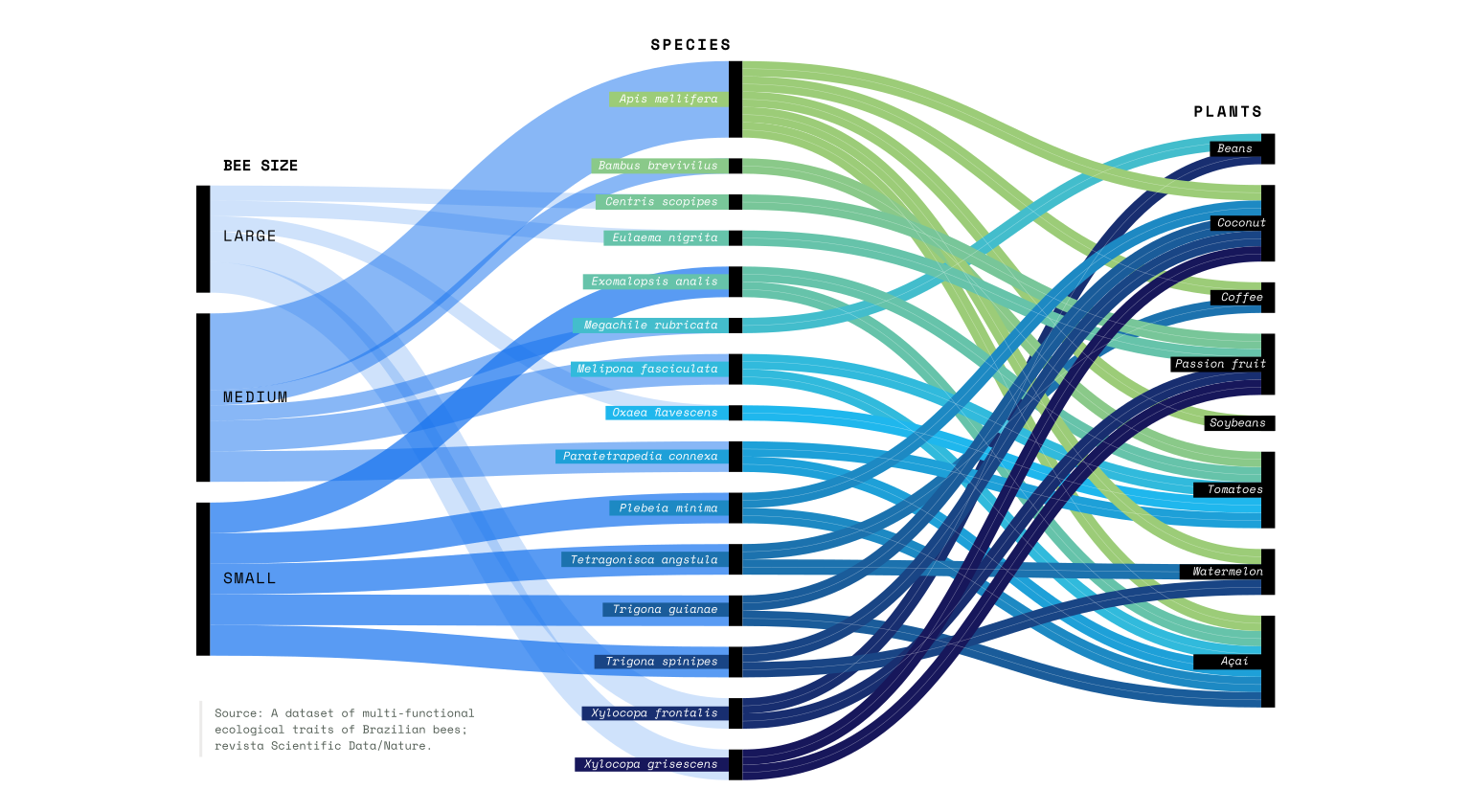
Illustration of a native Melipona seminigra bee
SCIENTIFIC NAME
Plebeia minima
POPULAR NAMES
Abelha-mosquito, mosquitinho
SIZE
Small
POLLINATES
Açaí, coconut, cupuaçu, among others
Illustration of a native Melipona seminigra bee
SCIENTIFIC NAME
Plebeia minima
POPULAR NAMES
Abelha-mosquito, mosquitinho
SIZE
Small
POLLINATES
Açaí, coconut, cupuaçu, among others
Illustration of a native Scaptotrigona tubiba bee
SCIENTIFIC NAME
Tetragonisca angustula
POPULAR NAMES
Jataí
SIZE
Small
POLLINATES
Coffee, watermelon, cupuaçu, among others
Illustration of a native Melipona seminigra bee
SCIENTIFIC NAME
Plebeia minima
POPULAR NAMES
Abelha-mosquito, mosquitinho
SIZE
Small
POLLINATES
Açaí, coconut, cupuaçu, among others
Illustration of a native Scaptotrigona tubiba bee
SCIENTIFIC NAME
Tetragonisca angustula
POPULAR NAMES
Jataí
SIZE
Small
POLLINATES
Coffee, watermelon, cupuaçu, among others

New and old threats to the forest

Illustration of a native Melipona seminigra bee
SCIENTIFIC NAME
Plebeia minima
POPULAR NAMES
Abelha-mosquito, mosquitinho
SIZE
Small
POLLINATES
Açaí, coconut, cupuaçu, among others

Despite the numerous pollination interactions and the diversity of bees, a threatening combination looms over the insects. “Our studies show that with climate change and deforestation, the habitats of bees in Northern Brazil may shrink. These future scenarios are worrying because if bees decrease, the agricultural system and even the local economy could be affected. Therefore, we are now focusing on better understanding this impact and possible solutions,” says Giannini.

“Our tropical bees face a challenge: they can handle a temperature variation within an optimal range [the period in which functions like reproduction and foraging reach a peak performance. If the temperature deviates from this range, this efficiency drops, potentially causing the death of the insects]. But the heat spikes that are occurring have caused a lot of stress in the colonies, with the loss of individuals,” explains Felipe Contrera, a biologist who studies the behavior of stingless bees and a professor at the Federal University of Pará (UFPA).

At the helm of the Ké Mel brand, Rosemir Ferreira says that in 2023, 5 tons of honey were collected and completely sold in the local market. But in 2024, 80% of the bees died, and production plummeted. Among the causes of the phenomenon, she also includes the use of pesticides on neighboring lands, fires, and attacks by wild animals, such as coatis and anteaters. It was possible to install screens against predators, but with regard to the other problems, it depends on changes in people's behavior.

Illustration of a native Scaptotrigona tubiba bee
SCIENTIFIC NAME
Tetragonisca angustula
POPULAR NAMES
Jataí
SIZE
Small
POLLINATES
Coffee, watermelon, cupuaçu, among others

“The practice of fire and poison, done by people without awareness, is affecting us a lot. We have already contacted the city hall and other agencies to help us in this debate, otherwise our pollinators will cease to exist,” she says. Another challenge in meliponiculture, Rose says, is the loss of swarms due to attacks by a specific stingless bee: the lemon bee (Lestrimelitta limao). “I don't know if it was the lack of food in the field or because of the application of poisons. The fight between them was big.”

With a favorable climate and a recovery of local vegetation, the expectation for 2025 was a record harvest at Ké Mel, which is not expected to happen. “There was a goal to harvest 6 tons, but unfortunately we will not reach it given this loss in the swarms. Maybe we will reach 3 tons.”

In addition to expanding production, Rose and her family intend to certify the honey so that the product can reach new markets. “We dream of putting honey in school meals,” she says. In parallel, the breeder wants to intensify her work with rural tourism, showing students and visitors how honey production works. The whole house is involved in the project. João, the eldest son, is in high school integrated with agro-industry. “What I tell him is to go, study, and come back to the base, which is what I did.”
New and old threats to the forest

Despite the numerous pollination interactions and the diversity of bees, a threatening combination looms over the insects. “Our studies show that with climate change and deforestation, the habitats of bees in Northern Brazil may shrink. These future scenarios are worrying because if bees decrease, the agricultural system and even the local economy could be affected. Therefore, we are now focusing on better understanding this impact and possible solutions,” says Giannini.

Illustration of a native Melipona seminigra bee
SCIENTIFIC NAME
Plebeia minima
POPULAR NAMES
Abelha-mosquito, mosquitinho
SIZE
Small
POLLINATES
Açaí, coconut, cupuaçu, among others

“Our tropical bees face a challenge: they can handle a temperature variation within an optimal range [the period in which functions like reproduction and foraging reach a peak performance. If the temperature deviates from this range, this efficiency drops, potentially causing the death of the insects]. But the heat spikes that are occurring have caused a lot of stress in the colonies, with the loss of individuals,” explains Felipe Contrera, a biologist who studies the behavior of stingless bees and a professor at the Federal University of Pará (UFPA).

At the helm of the Ké Mel brand, Rosemir Ferreira says that in 2023, 5 tons of honey were collected and completely sold in the local market. But in 2024, 80% of the bees died, and production plummeted. Among the causes of the phenomenon, she also includes the use of pesticides on neighboring lands, fires, and attacks by wild animals, such as coatis and anteaters. It was possible to install screens against predators, but with regard to the other problems, it depends on changes in people's behavior.

“The practice of fire and poison, done by people without awareness, is affecting us a lot. We have already contacted the city hall and other agencies to help us in this debate, otherwise our pollinators will cease to exist,” she says. Another challenge in meliponiculture, Rose says, is the loss of swarms due to attacks by a specific stingless bee: the lemon bee (Lestrimelitta limao). “I don't know if it was the lack of food in the field or because of the application of poisons. The fight between them was big.”

Illustration of a native Scaptotrigona tubiba bee
SCIENTIFIC NAME
Tetragonisca angustula
POPULAR NAMES
Jataí
SIZE
Small
POLLINATES
Coffee, watermelon, cupuaçu, among others

With a favorable climate and a recovery of local vegetation, the expectation for 2025 was a record harvest at Ké Mel, which is not expected to happen. “There was a goal to harvest 6 tons, but unfortunately we will not reach it given this loss in the swarms. Maybe we will reach 3 tons.”

In addition to expanding production, Rose and her family intend to certify the honey so that the product can reach new markets. “We dream of putting honey in school meals,” she says. In parallel, the breeder wants to intensify her work with rural tourism, showing students and visitors how honey production works. The whole house is involved in the project. João, the eldest son, is in high school integrated with agro-industry. “What I tell him is to go, study, and come back to the base, which is what I did.”

Pirarucu investigation imagePirarucu investigation image

Sweet insects of a biodiverse world

Illustration of a native Nannotrigona testaceicornis bee
SCIENTIFIC NAME
Scaptotrigona tubiba
POPULAR NAMES
Tubi, tubiba, tubi-bravo, tuibá
SIZE
Small
POLLINATES
Pitanga-do-mato, murici, goiaba-do-mato, among others

Sweet insects of a biodiverse world

The world of bees boasts diversity not only in species, but also in behaviors. In the organization of nests – such as in tree trunks and clay banks – some seem meticulously planned, symmetrical, while others are just heaps of chambers.

Most bees are not social; they live alone and take on all the work for their own survival and that of their descendants. Solitary bees are fundamental to the economy, as they are effective pollinators of many Brazilian agricultural crops. An economically important example is the bumblebees, large bees whose body size can reach 4 centimeters in length. They are specialists in pollinating Brazil nut and passion fruit trees. A single female can establish her nest, lay her eggs, and go out in search of nectar and pollen.

This is very different from the Apini (stinging honey-producing) and Meliponini (stingless honey-producing) tribes, which have a complex social organization. In these cases, the queen is basically an egg-laying machine – and that's all she does. Among most species of stingless bees, the decision about who will be a queen or a worker has everything to do with the amount of food she receives before the start of development. For these bees, the math is quite simple: larger cells receive more food, while smaller ones will receive less. If a female bee egg has the chance to develop in a large cell – the queen cell –, consequently, it will have access to more food and thus become a queen. “And contrary to what many people think, the queen bee does not give orders to the workers. Together, they form a self-organized society, in which the queen is responsible for generating new bees, while the workers perform all the other tasks you can imagine, from collecting food, to regulating the temperature, cleaning, and defending the nest,” says Jamille Veiga, from ITV.

How does a colony, which can have thousands of individuals, organize the tasks of each one on a daily basis? Something like a biochemical coordination can come into play. In the case of workers, some bee species use scent trails, of pheromones, just like ants do. “When a bee finds a food resource, it returns to the nest and, along the way, leaves a scent. The other bees follow this scent to the source. Other species emit sounds correlated with the distance and quality of the food source. And there are also bees that have no communication and just follow each other to the food source,” explains Felipe Contrera.

Thinking about the difficulties that colonies may face, such as lack of food, the biologist and his students are testing a supplement with the potential to replace pollen, using fermented soy. He guarantees that the delicacy is well-received. “It is a good source of protein for the bees,” observes Felipe. The researcher also studies the size of colonies, using curious techniques like a vacuum cleaner that sucks up the individuals without hurting them, in order to estimate the number of bees a colony must have to be considered healthy and how much food it needs to stay that way, providing subsidies for breeding by farmers.

According to the projections of a study by ITV researchers, published by Regional Environmental Change, only a small fraction – between 4% and 15% – of the 216 bee species evaluated will find climatically suitable areas in the state of Pará in the second half of this century due to climate change. In other words, from now on, any help from science will be welcome for the bees.

The illustrations on this page are visual artistic resources for educational purposes and do not represent scientific illustrations.

The world of bees boasts diversity not only in species, but also in behaviors. In the organization of nests – such as in tree trunks and clay banks – some seem meticulously planned, symmetrical, while others are just heaps of chambers.

Most bees are not social; they live alone and take on all the work for their own survival and that of their descendants. Solitary bees are fundamental to the economy, as they are effective pollinators of many Brazilian agricultural crops. An economically important example is the bumblebees, large bees whose body size can reach 4 centimeters in length. They are specialists in pollinating Brazil nut and passion fruit trees. A single female can establish her nest, lay her eggs, and go out in search of nectar and pollen.

This is very different from the Apini (stinging honey-producing) and Meliponini (stingless honey-producing) tribes, which have a complex social organization. In these cases, the queen is basically an egg-laying machine – and that's all she does. Among most species of stingless bees, the decision about who will be a queen or a worker has everything to do with the amount of food she receives before the start of development. For these bees, the math is quite simple: larger cells receive more food, while smaller ones will receive less. If a female bee egg has the chance to develop in a large cell – the queen cell –, consequently, it will have access to more food and thus become a queen. “And contrary to what many people think, the queen bee does not give orders to the workers. Together, they form a self-organized society, in which the queen is responsible for generating new bees, while the workers perform all the other tasks you can imagine, from collecting food, to regulating the temperature, cleaning, and defending the nest,” says Jamille Veiga, from ITV.

How does a colony, which can have thousands of individuals, organize the tasks of each one on a daily basis? Something like a biochemical coordination can come into play. In the case of workers, some bee species use scent trails, of pheromones, just like ants do. “When a bee finds a food resource, it returns to the nest and, along the way, leaves a scent. The other bees follow this scent to the source. Other species emit sounds correlated with the distance and quality of the food source. And there are also bees that have no communication and just follow each other to the food source,” explains Felipe Contrera.

Thinking about the difficulties that colonies may face, such as lack of food, the biologist and his students are testing a supplement with the potential to replace pollen, using fermented soy. He guarantees that the delicacy is well-received. “It is a good source of protein for the bees,” observes Felipe. The researcher also studies the size of colonies, using curious techniques like a vacuum cleaner that sucks up the individuals without hurting them, in order to estimate the number of bees a colony must have to be considered healthy and how much food it needs to stay that way, providing subsidies for breeding by farmers.

According to the projections of a study by ITV researchers, published by Regional Environmental Change, only a small fraction – between 4% and 15% – of the 216 bee species evaluated will find climatically suitable areas in the state of Pará in the second half of this century due to climate change. In other words, from now on, any help from science will be welcome for the bees.

The illustrations on this page are visual artistic resources for educational purposes and do not represent scientific illustrations.

Illustration of a native Scaptotrigona postica bee
SCIENTIFIC NAME
Trigona spinipes
POPULAR NAMES
Abelha-cachorro, arapuá, irapuá
SIZE
Small
POLLINATES
Watermelon, coconut, annatto, coffee, among others
Illustration of a native Nannotrigona testaceicornis bee
SCIENTIFIC NAME
Scaptotrigona tubiba
POPULAR NAMES
Tubi, tubiba, tubi-bravo, tuibá
SIZE
Small
POLLINATES
Pitanga-do-mato, murici, goiaba-do-mato, among others
Illustration of a native Scaptotrigona postica bee
SCIENTIFIC NAME
Trigona spinipes
POPULAR NAMES
Abelha-cachorro, arapuá, irapuá
SIZE
Small
POLLINATES
Watermelon, coconut, annatto, coffee, among others
Illustration of a native Nannotrigona testaceicornis bee
SCIENTIFIC NAME
Scaptotrigona tubiba
POPULAR NAMES
Tubi, tubiba, tubi-bravo, tuibá
SIZE
Small
POLLINATES
Pitanga-do-mato, murici, goiaba-do-mato, among others
Illustration of a native Scaptotrigona postica bee
SCIENTIFIC NAME
Trigona spinipes
POPULAR NAMES
Abelha-cachorro, arapuá, irapuá
SIZE
Small
POLLINATES
Watermelon, coconut, annatto, coffee, among others

Sweet insects of a biodiverse world

Illustration of a native Nannotrigona testaceicornis bee
SCIENTIFIC NAME
Scaptotrigona tubiba
POPULAR NAMES
Tubi, tubiba, tubi-bravo, tuibá
SIZE
Small
POLLINATES
Pitanga-do-mato, murici, goiaba-do-mato, among others

The world of bees boasts diversity not only in species, but also in behaviors. In the organization of nests – such as in tree trunks and clay banks – some seem meticulously planned, symmetrical, while others are just heaps of chambers.

Most bees are not social; they live alone and take on all the work for their own survival and that of their descendants. Solitary bees are fundamental to the economy, as they are effective pollinators of many Brazilian agricultural crops. An economically important example is the bumblebees, large bees whose body size can reach 4 centimeters in length. They are specialists in pollinating Brazil nut and passion fruit trees. A single female can establish her nest, lay her eggs, and go out in search of nectar and pollen.

This is very different from the Apini (stinging honey-producing) and Meliponini (stingless honey-producing) tribes, which have a complex social organization. In these cases, the queen is basically an egg-laying machine – and that's all she does. Among most species of stingless bees, the decision about who will be a queen or a worker has everything to do with the amount of food she receives before the start of development. For these bees, the math is quite simple: larger cells receive more food, while smaller ones will receive less. If a female bee egg has the chance to develop in a large cell – the queen cell –, consequently, it will have access to more food and thus become a queen. “And contrary to what many people think, the queen bee does not give orders to the workers. Together, they form a self-organized society, in which the queen is responsible for generating new bees, while the workers perform all the other tasks you can imagine, from collecting food, to regulating the temperature, cleaning, and defending the nest,” says Jamille Veiga, from ITV.

Illustration of a native Scaptotrigona postica bee
SCIENTIFIC NAME
Trigona spinipes
POPULAR NAMES
Abelha-cachorro, arapuá, irapuá
SIZE
Small
POLLINATES
Watermelon, coconut, annatto, coffee, among others

How does a colony, which can have thousands of individuals, organize the tasks of each one on a daily basis? Something like a biochemical coordination can come into play. In the case of workers, some bee species use scent trails, of pheromones, just like ants do. “When a bee finds a food resource, it returns to the nest and, along the way, leaves a scent. The other bees follow this scent to the source. Other species emit sounds correlated with the distance and quality of the food source. And there are also bees that have no communication and just follow each other to the food source,” explains Felipe Contrera.

Thinking about the difficulties that colonies may face, such as lack of food, the biologist and his students are testing a supplement with the potential to replace pollen, using fermented soy. He guarantees that the delicacy is well-received. “It is a good source of protein for the bees,” observes Felipe. The researcher also studies the size of colonies, using curious techniques like a vacuum cleaner that sucks up the individuals without hurting them, in order to estimate the number of bees a colony must have to be considered healthy and how much food it needs to stay that way, providing subsidies for breeding by farmers.

According to the projections of a study by ITV researchers, published by Regional Environmental Change, only a small fraction – between 4% and 15% – of the 216 bee species evaluated will find climatically suitable areas in the state of Pará in the second half of this century due to climate change. In other words, from now on, any help from science will be welcome for the bees.

The illustrations on this page are visual artistic resources for educational purposes and do not represent scientific illustrations.

Sweet insects of a biodiverse world

The world of bees boasts diversity not only in species, but also in behaviors. In the organization of nests – such as in tree trunks and clay banks – some seem meticulously planned, symmetrical, while others are just heaps of chambers.

Illustration of a native Nannotrigona testaceicornis bee
SCIENTIFIC NAME
Scaptotrigona tubiba
POPULAR NAMES
Tubi, tubiba, tubi-bravo, tuibá
SIZE
Small
POLLINATES
Pitanga-do-mato, murici, goiaba-do-mato, among others

Most bees are not social; they live alone and take on all the work for their own survival and that of their descendants. Solitary bees are fundamental to the economy, as they are effective pollinators of many Brazilian agricultural crops. An economically important example is the bumblebees, large bees whose body size can reach 4 centimeters in length. They are specialists in pollinating Brazil nut and passion fruit trees. A single female can establish her nest, lay her eggs, and go out in search of nectar and pollen.

This is very different from the Apini (stinging honey-producing) and Meliponini (stingless honey-producing) tribes, which have a complex social organization. In these cases, the queen is basically an egg-laying machine – and that's all she does. Among most species of stingless bees, the decision about who will be a queen or a worker has everything to do with the amount of food she receives before the start of development. For these bees, the math is quite simple: larger cells receive more food, while smaller ones will receive less. If a female bee egg has the chance to develop in a large cell – the queen cell –, consequently, it will have access to more food and thus become a queen. “And contrary to what many people think, the queen bee does not give orders to the workers. Together, they form a self-organized society, in which the queen is responsible for generating new bees, while the workers perform all the other tasks you can imagine, from collecting food, to regulating the temperature, cleaning, and defending the nest,” says Jamille Veiga, from ITV.

How does a colony, which can have thousands of individuals, organize the tasks of each one on a daily basis? Something like a biochemical coordination can come into play. In the case of workers, some bee species use scent trails, of pheromones, just like ants do. “When a bee finds a food resource, it returns to the nest and, along the way, leaves a scent. The other bees follow this scent to the source. Other species emit sounds correlated with the distance and quality of the food source. And there are also bees that have no communication and just follow each other to the food source,” explains Felipe Contrera.

Illustration of a native Scaptotrigona postica bee
SCIENTIFIC NAME
Trigona spinipes
POPULAR NAMES
Abelha-cachorro, arapuá, irapuá
SIZE
Small
POLLINATES
Watermelon, coconut, annatto, coffee, among others

Thinking about the difficulties that colonies may face, such as lack of food, the biologist and his students are testing a supplement with the potential to replace pollen, using fermented soy. He guarantees that the delicacy is well-received. “It is a good source of protein for the bees,” observes Felipe. The researcher also studies the size of colonies, using curious techniques like a vacuum cleaner that sucks up the individuals without hurting them, in order to estimate the number of bees a colony must have to be considered healthy and how much food it needs to stay that way, providing subsidies for breeding by farmers.

According to the projections of a study by ITV researchers, published by Regional Environmental Change, only a small fraction – between 4% and 15% – of the 216 bee species evaluated will find climatically suitable areas in the state of Pará in the second half of this century due to climate change. In other words, from now on, any help from science will be welcome for the bees.

The illustrations on this page are visual artistic resources for educational purposes and do not represent scientific illustrations.

GLOSSARY

Bioeconomy

an economic development model based on the sustainable use of biological resources

Pollen

is the male reproductive cell of flowering plants and carries half of the genetic material. When pollen reaches the stigma of the flower, it germinates and gives rise to the pollen tube, which grows towards the ovule. It is through this tube that the pollen's reproductive nucleus reaches the ovule and enables the formation of the seed

Exoskeleton

an external structure that serves as support and protection for some invertebrate animals, such as insects and arachnids

Cell (Alvéolo)

a small wax cavity built by worker bees; a set of cells forms a comb; in the architecture of Apini bees (honey-producing bees that have a stinger), it serves to store honey, pollen, and house developing individuals (passing through the egg, larva, pupa, and adult stages); in the architecture of Meliponini bees (honey-producing bees that do not have a stinger), it is intended only to shelter developing individuals – in this group of bees, honey and pollen are stored in other structures, the food pots

Pheromones

chemical substances produced and released by a living being that cause a behavioral or physiological response in other individuals of the same species