Genomics of the Brazilian Biodiversity
Science, tradition and a standing forest are in the pirarucu's DNA
Genomic sequencing of the fish can promote sustainable management and conservation solutions, including the creation of inviolable certificates of origin and the protection of strategic populations.
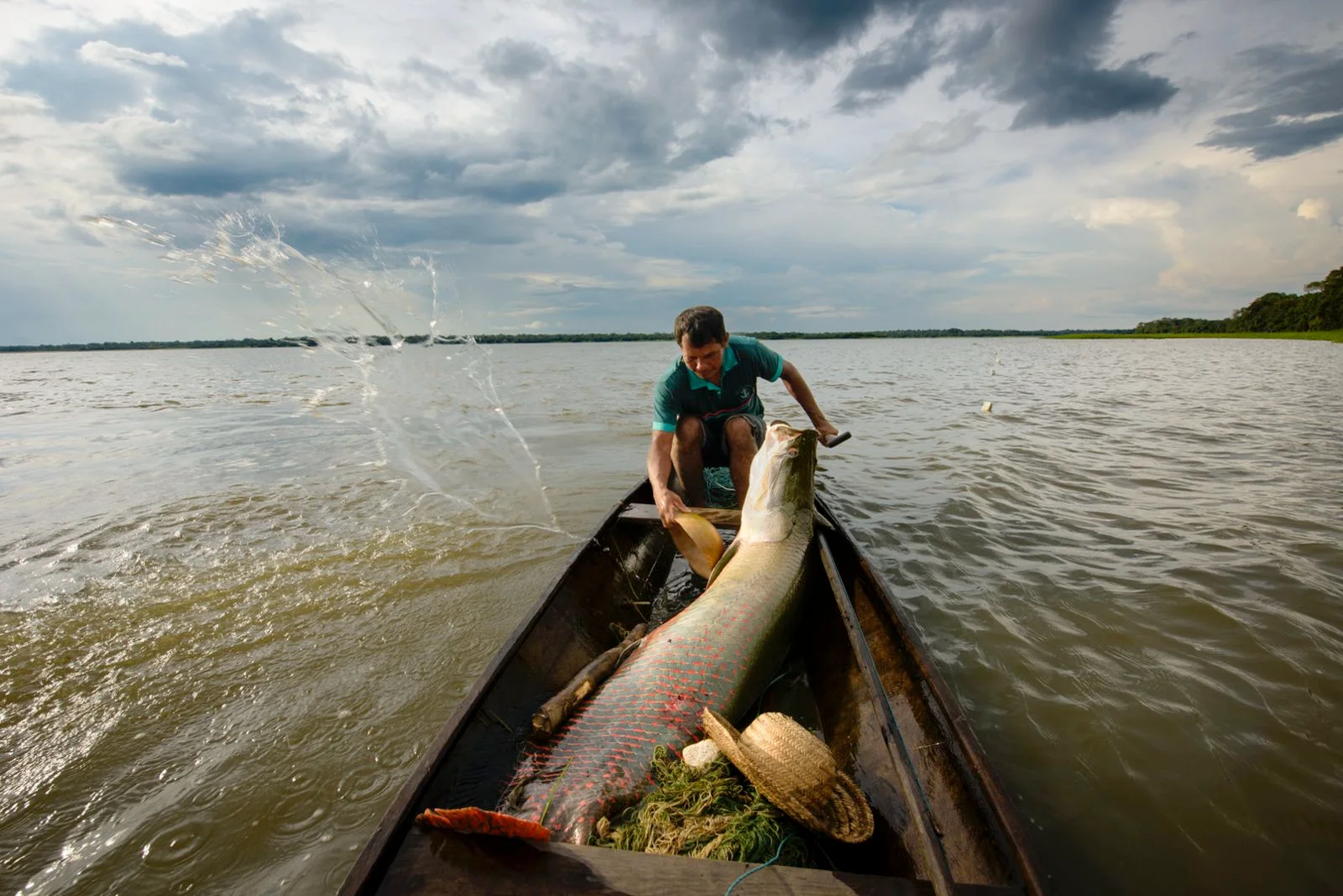
Fisherman carry pirarucus caught in the Amanã Sustainable Development Reserve, in Amazonas, one of the conservation units where the Mamirauá Institute operates. The sustainable fishing method developed at the institute was so successful that it became a public policy of Ibama. The project impacts the lives of 42 communities and 1,650 people and, in the 2023 management, generated 600 tons of fish. PHOTO: Luciano Candisani
Why is it important to tell this story?
Protecting the Amazon entails creating conditions for communities to generate income from sustainable activities. This story highlights how genomic sequencing of the pirarucu can boost conservation and increase productivity, strengthening the riverside bioeconomy.
Partnerships and collaborations
The Genomics of the Brazilian Biodiversity (GBB) project is led by the Vale Institute of Technology and the Chico Mendes Institute for Biodiversity Conservation. More than 300 researchers from national and international institutions such as the University of São Paulo, the Federal University of Pará, and the University of Oxford in the UK are participating, as well as hundreds of organizations like Ibama and Fiocruz.
Mata N’Ativa Glossary
We work for access to scientific knowledge. Be sure to explore the glossary at the end of the story to get a clearer understanding of each of the concepts covered in the text!
Access Glossary
In Amazonian mythology, Pirarucu was a brave warrior from the Uaiás tribe who, one day, for no reason, executed some men from the village. Tupã, the god of gods, did not like this and decided to punish the warrior: with the help of Polo, the god of the winds, he sent down his most powerful lightning bolt. Tupã's fire lit up the entire forest. Pirarucu tried to escape but, wounded in the heart, was taken to the depths of the Tocantins River, where he transformed into a giant fish. Then he disappeared into the waters and never returned.
The legend of the warrior transformed into a fish reflects the real drama of the species Arapaima gigas, for decades threatened by predatory fishing. The pirarucu was included in the list of the Convention on International Trade in Endangered Species of Wild Fauna and Flora (CITES) in 1975, and its capture was prohibited in 1996. Today, the recovery of this emblematic creature of the Amazon depends on community management and scientific advances. Genomic sequencing emerges as a tool capable of rewriting the future of this giant of the waters, boosting the forest economy and ensuring its survival sustainably.
With an investment of R$ 110 million, the Genomics of the Brazilian Biodiversity (GBB) project brings together more than 300 scientists from at least 100 national and international research institutions, in a broad network coordinated by ICMBio and ITV. The objective is to generate genomic data on the fauna and flora of Brazil, including investigations into the genetic diversity of species with bioeconomic potential within protected areas in the Amazon.
The scientists' plan is to produce a gold standard reference genome – when the genomic sequence is of the highest quality because it is precise and complete, reliable for determining the sequence of nucleotides of the DNA –, in addition to population genomes. “We may discover that what we call pirarucu is not just one species, but several. In addition, the genomic information will support and update extinction risk analyses, providing precise information for conservation actions,” explains Amely Martins, PhD in evolutionary anthropology, environmental analyst and coordinator of the GBB by ICMBio. From an economic point of view, the optimism is the same. “We will be able to analyze which populations have the most commercially interesting characteristics, gather data to combat diseases and define environmental factors that affect the production chain.”



Genomics can also help elucidate one of the most pressing issues of aquatic biodiversity in the Amazon: mercury contamination of fish, a problem that reaches the consumer's table. “The Amazon River Basin is suffering an intense impact from illegal mining. As pirarucus are top-of-the-chain animals, they consume smaller contaminated fish and accumulate the metal in their bodies. From genetic research, we will investigate how the concentration of mercury may be interfering with the fish's metabolism and its potential consequences,” says Martins.
This analysis will be done through the transcriptome, the complete set of RNA molecules transcribed from the DNA in a cell or tissue at a given moment – they are different types of RNA, such as messenger RNA and non-coding RNA. The study of the transcriptome allows us to understand which genes are active in a cell or tissue and how this gene expression is regulated and varies under different conditions, such as in diseases or in response to environmental stimuli. RNA sequencing techniques are frequently used to analyze the transcriptome, providing insights into cell biology and pathological processes. “The idea is to understand if pirarucus with more mercury have a different production of transcripts and what harms and alters the metabolism of individuals,” completes Martins.
The findings should impact the production chain and the consumer market. Those who buy Amazonian fish do not currently have all the information they should, argues Diogo Lagroteria, a veterinarian with a master's degree in ecology and an environmental analyst at ICMBio. “From genetic analyses of fish samples, it will be possible to certify the origin of the pirarucu, to know if it came from a healthy environment, the result of legal fishing,” he says. “This will favor the producer who is committed to complying with the law and conserving the species. A certificate of origin and genetic traceability will add value to the product and may result in a seal of quality and sustainability, giving more security to the consumer.”

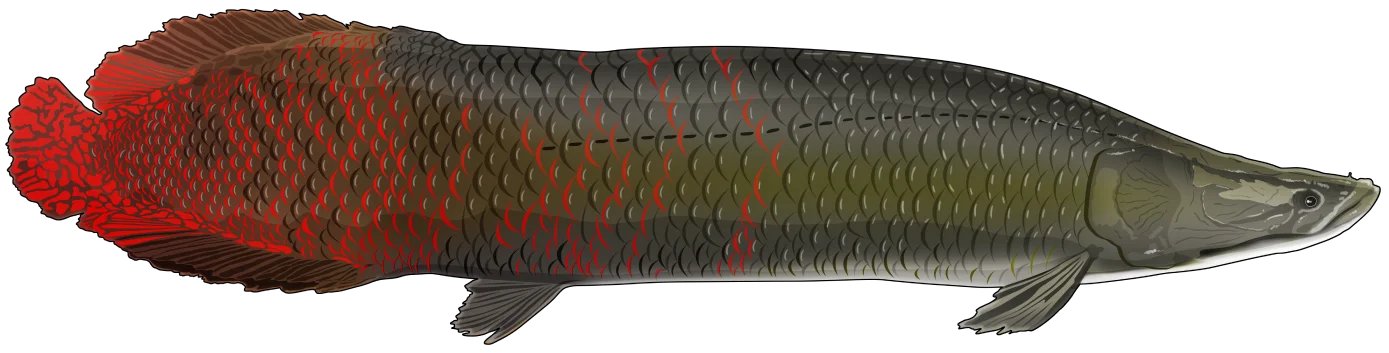
“If a specific population of pirarucu displays a different scale color that helps it to camouflage and protect itself from predators, and indiscriminate fishing impacts this group, the genetic variant that altered the color may disappear”
Santelmo Vasconcelos, biologist and researcher at ITV
Genomics as a conservation strategy
Detailed genomic information can guide effective public policies based on increasingly specific protocols. In the study of population genomes, for example, researchers can conclude that a certain population of pirarucu suffers from genetic erosion – the sudden loss of gene variability –, recommending to the Brazilian Institute of the Environment and Renewable Natural Resources (Ibama) to reduce its fishing quota. “The opposite can also happen: if the study indicates that a certain population is larger and its genetic diversity is preserved, we can guide management actions that value this population as a potential source for genetic reinforcement of other areas and as a model for in situ conservation strategies," adds Lagroteria.
The study of the genetic diversity of populations and the mapping of their vulnerabilities is one of the objectives of the GBB. Fish like the pirarucu, which already have good market acceptance, may have a greater tendency to genetic erosion. Several reasons contribute to this situation, such as overfishing and natural or anthropic pressures. When genetic diversity decreases, the species becomes more vulnerable, as there are fewer gene variations to help with adaptation. “If a specific population of pirarucu displays a different scale color that helps it to camouflage and protect itself from predators, and indiscriminate fishing impacts this group, the genetic variant that altered the color may disappear,” points out Santelmo Vasconcelos, biologist, master in genetics and member of the GBB management committee by ITV.
Species with greater genetic variability have a greater capacity to adapt to climate change, as they have a large gene pool in case of selective pressure. The gene pool is the sum of all genes present in a given population. Therefore, sequencing the genome and mapping the genetic diversity of the pirarucu is an action directly linked to planning more assertive conservation projects.
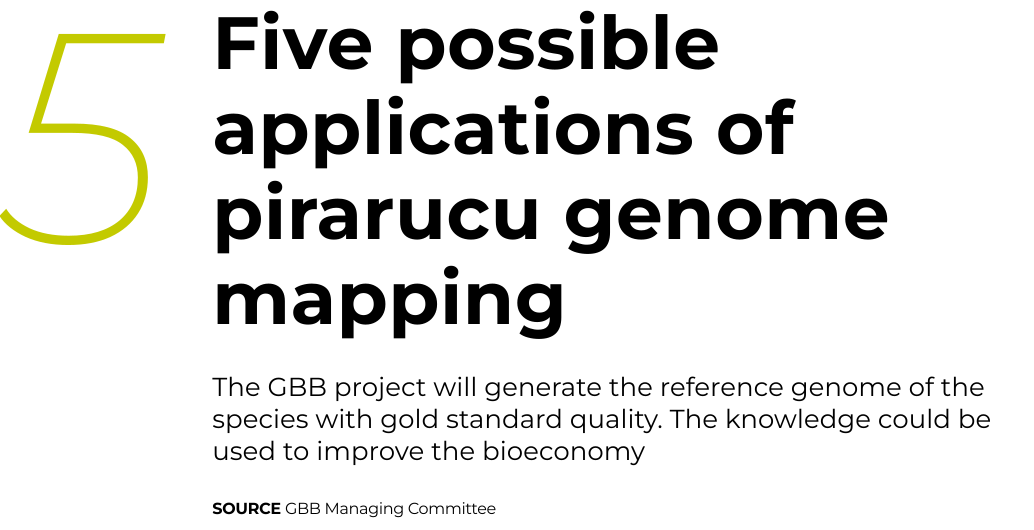


The differential of the GBB will be to develop a gold standard reference genome for the pirarucu, of high precision, in line with the mappings done by the main international consortia and with an error rate generally below 0.1%. This genome can be used in subsequent population studies using other cheaper sequencing approaches, based on reads of 50 to 300 nucleotide base pairs. The gold standard has scalability, as it allows the sequencing of large volumes of DNA in parallel – an efficient option for large-scale projects, such as whole genome sequencing. “We will compare the reference genome with population genomes and, from there, understand in which regions there is more genetic diversity. It will also be possible to discover which set of genes are associated with certain morphological characteristics, such as the individual's size, its body mass production and collagen production,” says José Augusto Bitencourt, PhD in marine biology and member of the GBB management committee.
For medium-term studies, according to the researcher, it is important to use genomics to also understand the environments where the pirarucu lives. “Any species has a genetic framework, but there is the influence of the environment. For example: we discovered that a specific population has a genome that points to the ability to produce more protein than other populations. But if this population is in a nutrient-poor environment, the fish may not fully realize their genetic potential.”
The project also includes an analysis of the pirarucu's diet, using Metagenomics and metabarcoding. These techniques allow for the investigation of the diversity of organisms present in the digestive tract, providing insights into how bacteria, fungi, and viruses contribute to the fish's digestion and health, including its resistance to pathogens. Furthermore, they help to understand the changes in diet and microbiota throughout the dry and rainy seasons, reflecting the availability of resources in the environment. “These are data that will help us think about the habitat of populations in a more systemic way,” explains Amely Martins.
On the other hand, it is essential that scientific knowledge is associated with the traditional knowledge of the communities that work with the management of the pirarucu. It is the riverside dwellers who, in practice, guarantee the conservation of the pirarucu, protecting the environment in which the fish lives and adopting good management practices. With this exchange, the communities would have the chance to apply the conclusions of the studies in management and zoning, the division of fishing in the lakes.
“Genomics can identify a population with diversity and interesting characteristics for commercialization. But scientists do not always know the necessary logistics to carry out the capture of the fish. Some areas have difficult access, with submerged trunks. That's where the fisherman's experience comes in,” says Ana Cláudia Torres Gonçalves, coordinator of the fisheries management program at the Mamirauá Institute.
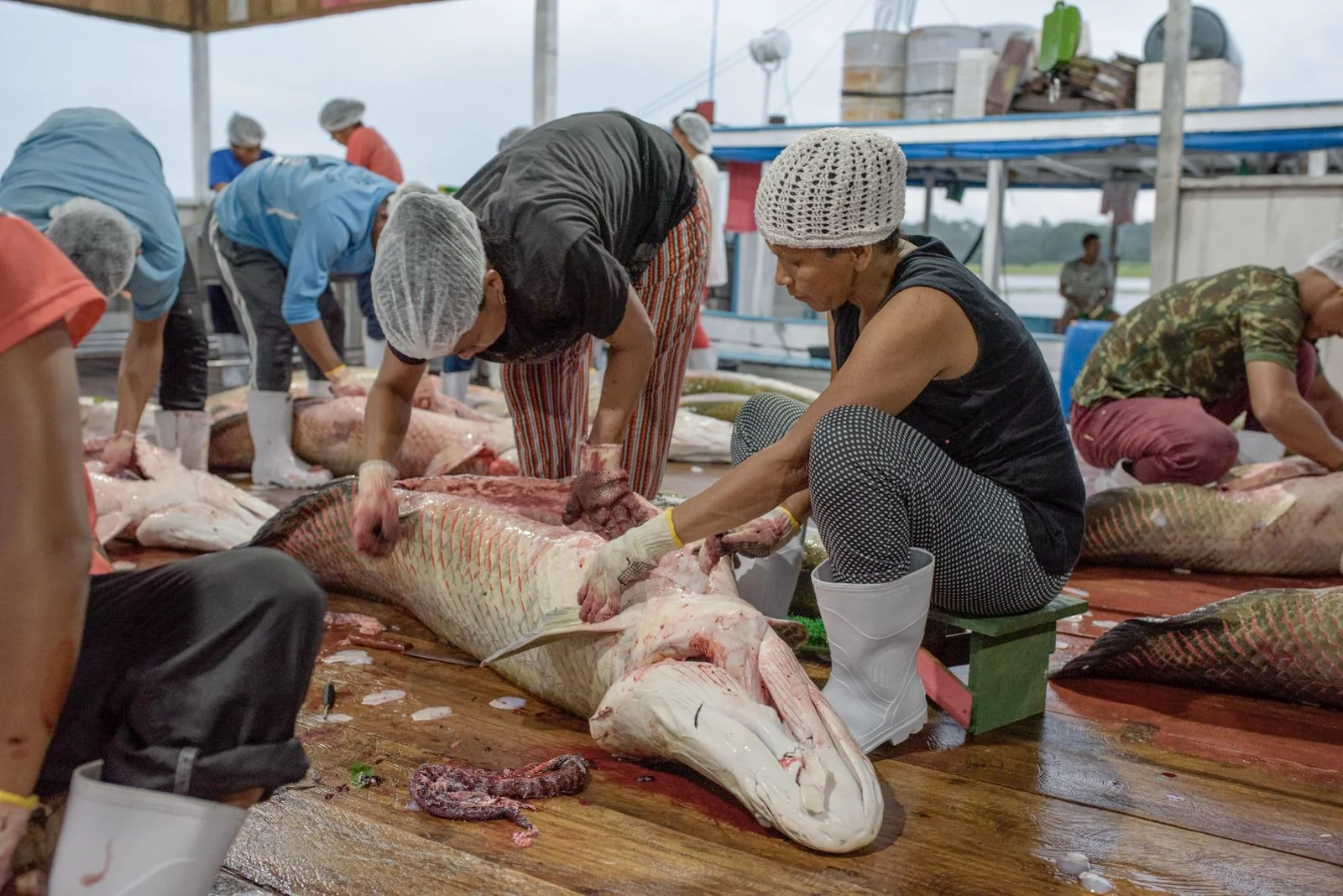
Women process freshly caught pirarucus at the Mamirauá Sustainable Development Reserve, in Amazonas. PHOTO: Luciano Candisani
Bioeconomy: a model that guarantees conservation and economic benefits
To ensure the sustainability of the pirarucu production chain, it is necessary to invest in both ends: genomic research and structuring the fish value chain. For this, the Vale Fund has signed a technical cooperation partnership with ICMBio, through the Sustenta.Bio Program, which aims to promote economic activities that preserve the forest in communities living in protected areas.
The area covered by the initiative reaches 10 million hectares in 14 sustainable use Conservation Units (UCs), located in the states of Pará and Amazonas. There are six production chains, including that of the pirarucu. Two projects have gained prominence in Amazonas: the Management of Fishery Resources for Protection and Territorial Development in the Central Amazon, in areas of operation of the Mamirauá Institute, and the Fair and Sustainable Community Management, in areas of operation of the Association of Rural Producers of Carauari (ASPROC).
“The work aims to strengthen traditional producers. In the Médio Juruá, we work with ASPROC to build a fish processing unit, so that from Carauari the pirarucu can reach the world already gutted, cleaned, packaged, and frozen. Before, the product had to be taken to Manaus, a seven-day trip, to be processed. Now, without intermediaries, the community can get a fair price for the fish,” says Mônica Tavares, coordinator of the Sustenta.Bio Program.
The Mamirauá Institute, in turn, works in the Médio Solimões region with the technical training of riverside communities, that is, the certification of the methodology for all stages of management. The method, which began in 1999, is so successful that it became a public policy of Ibama and currently impacts the lives of 42 communities, a total of 1,650 people. In the 2023 management, it generated R$ 4.3 million with the production of 600 tons of fish – an example of how the bioeconomy can transform local life. “When I started fishing, it was just to survive. There were almost no pirarucu in the rivers,” says Maria das Graças de Souza, 59, one of the beneficiaries of sustainable management.
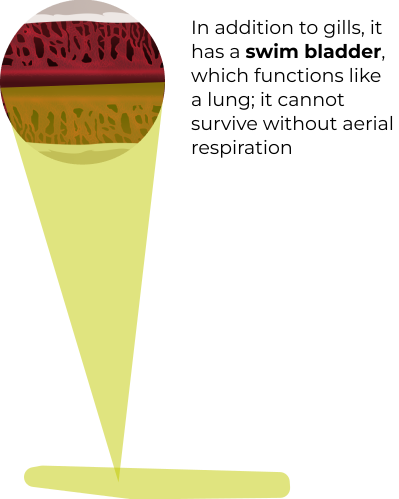
The story of the pirarucu can gain new chapters with genomics. “The historical processes of fishing pressure and climate change can be read from the DNA, which allows us to seek information to try to avoid similar impacts in the future,” says Diogo Lagroteria. One of the references for understanding the biological adaptations of the pirarucu over time is the study The pirarucu (Arapaima gigas) genome provides insights into gigantism, fast growth and chromosomal sex determination system, published in 2019 in the journal Nature Communications. In it, the researchers identified genes related to aerial respiration, such as those involved in the development of primitive lung structures and the regulation of gas exchange. These are genes that help explain the adaptations of the pirarucu for survival in environments with low oxygen levels – a striking characteristic of the species.
The ability to adapt is a link between the riverside people and the fish. Antônio Moura da Cunha, 60, who works for ASPROC in Carauari, remembers when he had to survive in adverse conditions, with few fish in the water and harassment from illegal fishermen. If at first he had doubts about the management methodology, today Cunha and other fishermen participate in the counting of the pirarucu. “When the proposal to do management came up, nobody accepted it. It took more than a year of meetings to convince the community,” says Cunha, a resident of the São Raimundo community, in the Médio Juruá Extractive Reserve (Resex).
ASPROC currently serves 55 communities and has more than 800 member families. When the association did the first management in the region, in 2011, the stock of pirarucus was only 4.9 thousand fish; Ibama allowed the fishing of 100. “By 2023, more than 53 thousand fish were counted in the aquatic environments of the Médio Juruá and the fishing of more than 5 thousand pirarucus was released, a total of 250 tons. The income was R$ 2.5 million for the communities,” says Adevaldo Dias, ASPROC's advisor on access to public policies and bioeconomy.
The income from the pirarucu usually varies between R$ 4 thousand and R$ 7 thousand for the management period. “It makes a difference in the families' lives, but it would be ideal to recognize that our work goes beyond management. We provide environmental services to the whole world by conserving the rivers, lakes, and the Amazon Rainforest, and it would be fair for the communities to be somehow remunerated for this,” argues Dias. Cunha agrees: “When we preserve a management lake, we don't just preserve the pirarucu. We preserve all the species there. And also the timber and game, because we monitor the area against invaders.”
In São Raimundo, the managers saved the amount received from the management for three years and acquired a German solar system that now provides electricity to all the houses. “Before, everyone only left the light on for about three hours a day. That's what we could afford to pay for the diesel generator. Now, we don't pay anything anymore and we have 24-hour energy. Thanks to the management,” celebrates Cunha.
Finally, when he learns about genomics research and how it can further increase the community's earnings and the protection of the Amazon, the fisherman gives a broad smile and says: “By the way the fish floats, and even by the 'noise' it makes in the water, we know its size, whether it's an adult or a juvenile. We're going to show the scientists how we recognize the perfect pirarucu.”

Part of the pirarucu sustainably caught in the reserves ends up in the markets of Manaus, in Amazonas. In 2023, the management generated R$ 4.3 million for the communities. PHOTO: Flavio Varricchio/BrazilPhotos
GLOSSARY
Reference genome
a DNA sequence that serves as a model or standard to represent the complete genome of a species, exemplifying its genetic organization; it is used for comparisons and analyses of genetic variations among individuals, populations, or species
Nucleotides
basic units that form nucleic acids: DNA and RNA
Population genomes
the set of genetic variations within a population of organisms; the study of population genomes examines how DNA varies among individuals of the same species in different geographical locations, time periods, or environmental conditions, allowing for the calculation of important parameters indicating the risk of species extinction
Species with bioeconomic potential
those that can generate economic value sustainably
Genomics
the science that studies the genome (complete set of genetic material) of a species by obtaining its sequence to understand its structure, organization, and function
RNA molecules
like DNA, they carry genetic information, but while DNA stores information to form all the body's proteins, RNA molecules are shorter and help convert the genome's instructions into cellular functions
DNA
a molecule present in the nucleus of each cell where an organism's genetic information is stored; it is considered the essence of heredity
Messenger RNA
also known as mRNA, is a type of ribonucleic acid molecule that transports genetic information from the DNA in the cell's nucleus to the ribosomes in the cytoplasm, where this information is “translated” to synthesize proteins
Non-coding RNA
a type of ribonucleic acid molecule that does not serve as an “instruction” for protein synthesis; there are several types that perform different functions, such as protection against viruses
Genes
stretches of the genetic code that, when read or activated, generate some effect in the cell, such as the manufacture of a protein; they are like an “instruction manual” for the cell
Morphological characteristics
the shape and structure of an organism, including aspects of external appearance, such as color, and internal traits, such as bones and organs
Metagenomics
simultaneous sequencing of all DNA present in a sample, allowing for the identification and functional analysis of multiple microorganisms
Metabarcoding
sequencing of specific DNA regions, amplified by PCR (Polymerase Chain Reaction), to identify multiple organisms present in a sample
READ MORE
by Leticia Maia
Consortium brings together hundreds of researchers to map genomes of Brazilian species
August 25, 2025
by Ana Rita Martins
Scientific consortium investigates traces of DNA in Brazilian ecosystems to monitor and conserve species
August 25, 2025

by Letícia Naísa
Understand how getting to know the Itacaiúnas river basin can help conserve the entire Amazon
September 25, 2025