Genomics of the Brazilian Biodiversity
How to protect biodiversity? The answer may lie in the genes
Consortium of hundreds of researchers seeks to sequence the genomes of key species and provide important information for conservation and the development of the bioeconomy.
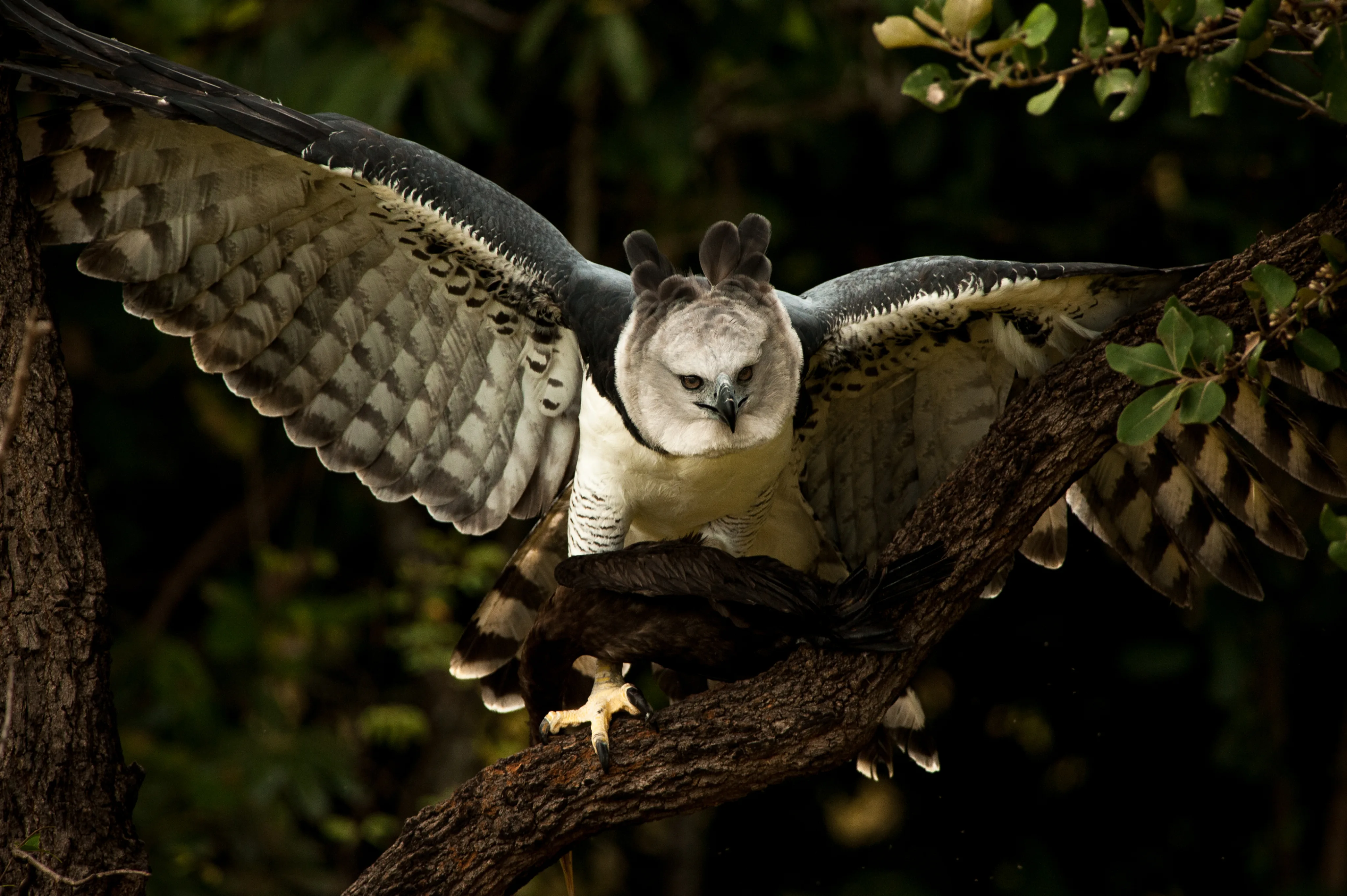
The genomic sequencing of the harpy eagle helped confirm the reasons for the species being threatened with extinction: the reduction of its natural habitat and its food sources. PHOTO: Rubens Matsushita/ICMBio
Why is it important to tell this story?
The genomes of Brazil's fauna and flora, among the most biodiverse in the world, may hold fundamental answers upon which to base public policies for the conservation of species and to make the bioeconomy more efficient. This story shows how scientists are working to find these paths in an unprecedented initiative in the country, which could drive impactful changes in the proposal of public policies related to conservation and the bioeconomy.
Partnerships and collaborations
The project Genomics of the Brazilian Biodiversity ( GBB ) is a consortium led by the Vale Institute of Technology (ITV) and the Chico Mendes Institute for Biodiversity Conservation (ICMBio). It features the participation of over 100 researchers from institutions in Brazil and overseas, including the University of São Paulo (USP), the Federal University of Pará (UFPA) and Oxford University in the UK, as well as dozens of organizations, such as the Brazilian Institute for the Environment and Renewable Natural Resources (Ibama) and the Oswaldo Cruz Foundation (Fiocruz).
Mata N'Ativa Glossary
We work for access to scientific knowledge. Make sure to explore the glossary to gain greater clarity on each of the concepts discussed in the text!
Access Glossary
A female harpy eagle is flying freely through the Amazon rainforest skies, near Parintins (Amapá), when she is shot. Hunters try to capture her illegally. The bird, however, is rescued by technicians from the Brazilian Institute for the Environment and Renewable Natural Resources (Ibama) and has a different fate. After receiving care, she began to make contributions to science: using a sample of her blood, researchers developed the first complete genetic map of the species, the largest bird of prey in South America, which is threatened with extinction.
The genome revealed to scientists the reasons for the harpy eagle's rapid decline in population: the reduction of its natural habitat, its food sources and genetic isolation. An article on the subject was published in September of 2024 in Scientific Reports, one of the world's most renowned scientific journals. The study was led by researchers from the Vale Institute of Technology (ITV), in partnership with scientists from the National Amazon Research Institute (INPA), the Federal University of Amazonas (UFAM), the State University of Campinas (Unicamp), the Federal University of Espírito Santo (UFES) and international institutions like Rockefeller University in the United States.
The evidence points to a shrinking of the species' population over the past 20,000 years, coinciding with human occupation in the south of the American continent. The most severe impacts occurred in the last few hundred years. The main threats are deforestation, fires and climate change. Since 1970, the Amazon has lost around 17% of its forest cover, while over 85% of the original Atlantic Forest vegetation has been devastated, wiping out entire populations of harpies. Deforestation fragments territories, reducing the genetic variability of the species and making it difficult for them to reproduce.
The recently released results are just one example of several that are expected by the Genomics of the Brazilian Biodiversity (GBB) team, a public-private partnership between ITV and the Chico Mendes Institute for Biodiversity Conservation (ICMBio). The agreement signed in 2022 will generate genomic data on Brazilian fauna and flora. The focus is on three categories of species: endangered, invasive (which represent a threat to native biodiversity) and those that have bioeconomic potential.
The GBB aims to better understand and catalog Brazilian biodiversity and provide important information for conservation and the development of the bioeconomy. The expectation is that the data generated will contribute to the development and improvement of public policies, the creation of new technologies and advances in scientific knowledge.

“GENETIC STUDIES OFFER THE POSSIBILITY OF INCORPORATING THIS DATA INTO PLANS FOR THE MANAGEMENT AND MONITORING OF SPECIES”
Guilherme Oliveira, Scientific Director of ITV Sustainable Development
The genomic revolution
"Genome sequencing seems trivial today, but it's a revolution that took place in a relatively short period of time," explains Alexandre Aleixo, coordinator of the GBB consortium for ITV. "Medicine does a lot of this for therapeutic purposes, but this technology has made advances in terms of agriculture and livestock. Genomics has radically changed the way varieties of plants and animals suitable for consumption are selected, for example, and has also brought new tools to deal with the conservation of species," says Aleixo. Five years ago, according to the researcher, a lot of the equipment that makes this type of research possible didn't exist. "This technology is overwhelming. We can get dizzy from all the new developments," jokes the scientist.
The GBB also plans to conduct case studies and establish biodiversity sampling protocols using techniques based on environmental DNA and “Metabarcoding”, which allow for multiple species to be identified with a single environmental sample based on the analysis of DNA fragments. In 2024, expeditions were carried out to collect samples in the Tapajós National Forest, in the state of Pará, and in the Cajari River Extractive Reserve, in the state of Amapá.
"Unlike other similar projects around the world, our aim is not to make as many genomes as possible. We want to conduct population studies, understand the physiology of the species and the genetic innovations they have created over time to adapt to different environments and situations. There is a lot of scientific knowledge to be explored," says Guilherme Oliveira, ITV's scientific director and creator of the GBB. "Genetic studies offer the possibility of incorporating this data into plans for the management and monitoring of species," he says.
The group's goal is to generate 80 reference genomes, i.e. models that can be used as a genomic standard for a species or population, by 2027. The experts also hope to gather at least 1000 population genomes, which can provide important information on the genetic variation of specific populations, and 1,600 DNA barcodes, which work like the barcodes on products in a supermarket, used to identify species of living beings.
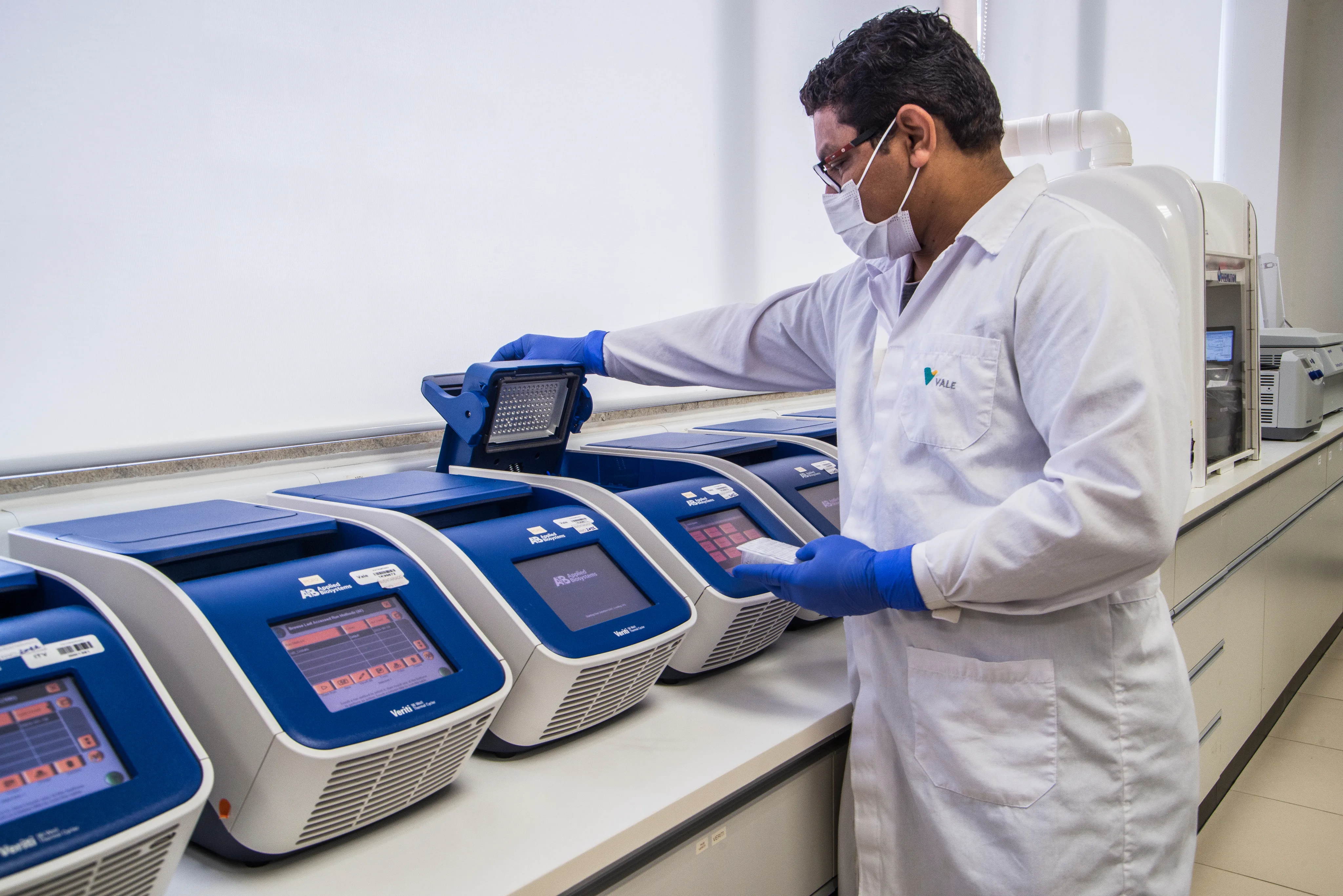
Laboratory technician, Manoel Lopes, inserts samples into the thermocycler, an essential step for generating DNA barcodes. PHOTO: Miguel Aun / Vale Institute of Technology Collection
Reference genome sequences of vertebrate species occurring in Brazil submitted to GenBank
Data shows that the country still plays a secondary role in producing science about its own species
GenBank is the genome bank maintained by the National Center for Biotechnology Information (NCBI). The US government structure gathers genetic and genomic information from species worldwide. A survey conducted on the platform in August 2023 considers vertebrates occurring in Brazil assessed by ICMBio's Biodiversity Extinction Risk Assessment System (SALVE), which provides the most recent information on the country's species.
A challenge as big as Brazil itself
The project is ambitious: so far, there are 284 researchers involved and investments of over R$110 million. The idea is for the GBB to expand to all of Brazil's biomes. The partnership with ICMBio, with its infrastructure for research in strategic locations, is fundamental for this effort.
"This is the first time that an environmental agency connected to the federal government has participated as co-manager of a genomics consortium, and this is significant, not just because of the innovation, but also due to the magnitude of the goals proposed by the consortium and, above all, because it aims to directly apply the technologies and tools of genetics and genomics to address issues directly related to biodiversity conservation," says Amely Martins, an environmental analyst and coordinator of the GBB at ICMBio.
In addition to the country's continental dimensions, there are other challenges. In an article published in November of 2024 in the journal Cell Genomics, Martins, Aleixo and other scientists involved in the GBB detail some of these obstacles, such as high operating costs. According to estimates from the GBB, sequencing genomes in Brazil is at least three times more expensive than in the United States because of import taxes on inputs and equipment. "The world is not prepared to have a country from the global south producing genomics research on the scale that we are. Institutions similar to ours outside the country pay much less for reagents and other items," says Aleixo, of ITV.
The researcher also points to logistical barriers: there needs to be specialized transportation in order to bring samples from the field to the sequencing centers, as the materials require refrigeration. "Few companies offer this type of specific service, which implies very high costs."
The availability of advanced sequencing equipment in Brazil is also restricted. According to the article published in Cell Genomics, in 2023, there were only four PacBio sequencers operating in Brazil capable of generating reference genomes according to the highest quality standards. Maintenance of this type of equipment is another difficulty, as there are few people specialized in operation and inspection. That is why the GBB is investing in training specialized professionals both to operate the complex machinery and to work in the field of biodiversity genomics.
"We have to democratize knowledge. Our biodiversity is huge, so it's impossible for a single group to be able to sequence all the species. We have to train more people so that they can understand the technology and data and disseminate this learning," says Guilherme Oliveira.

Researcher Amanda Vidal operates the PacBio, an equipment for sequencing reference genomes, at the ITV laboratory in Belém. The import costs of machines like this are one of the factors that make genomic sequencing work more expensive in Brazil. PHOTO: Miguel Aun / Vale Institute of Technology Collection
GBB Governance and Research Tracks
The full story of the book
Since the project began, nine training events have been held, in which 41 ICMBio staff and fellows and 27 ITV fellows have received training. Some participants have attended more than one training event. There were 72 training opportunities for ICMBio and 63 for ITV, in different areas of knowledge associated with the project, such as sample collection and analysis of metabarcoding environmental DNA data, analysis of reference genome data and analysis of organellar genome data.
According to Martins, this is an important step for genomic research in the country. "Several colleagues have already taken advantage of the knowledge in the area, not necessarily to become geneticists or bioinformaticians, but to have more qualified conditions for dialoguing with researchers to propose projects and to understand which genetic or genomic tools are suitable for answering which questions, for example," explains Amely Martins.
In addition, the GBB will be a tool for integrating the science produced in the country. Many Brazilian researchers and institutions have ongoing projects linked to genetic sequencing. The consortium has created tools to combine research results and avoid re-sequencing what already exists. "Bringing everything together on the same basis will be of enormous importance. It will direct efforts so that we can understand what has already been produced and know what has yet to be investigated," says researcher Alexandre Aleixo. The commitment to feeding databases with the genomes of species from one of the world's most biodiverse countries puts Brazil at the forefront of genomic research on the international stage. "Everything that the GBB generates will be deposited in public banks," he says.
In the midst of the global climate emergency, this information could provide essential answers for the conservation of species. "The GBB speaks to the social and environmental contexts in which we are living. Although society's perception of climate change is still quite heterogeneous, we know that it is a fact. Several researchers are trying to understand the mechanisms by which species adapt to this climate crisis," says Aleixo.
Other countries have projects in the same direction. In the UK, the Darwin Tree of Life aims to unravel the genome of all living organisms in the country - the goal is to sequence around 70,000 species. Brazilian researcher Marcela Uliano da Silva works as a senior bioinformatician in the consortium and emphasizes that essential answers for our time may emerge from microscopic analysis. "Genomes give the complete history of a species," she explains.
"When we do whole exome sequencing, we learn how an organism produces its proteins, its tissues and how it does certain things. So, by looking at the entire DNA of various species around the world, we can find new substances, new compounds and enzymes for products that are biologically active, which we can use routinely and which can improve human health, for example."
Submissions of genomes of endemic Brazilian species to GenBank
The United States has mapped 13 times more genomes of endemic Brazilian species than Brazil itself
Data from August 2023 show that a large part of the genome studies of species that only occur in Brazil is concentrated in countries of the global north. Source: GenBank / NCBI
Decolonizing science
A member of the Justice, Equity, Diversity and Inclusion Committee of the Earth BioGenome Project (EBP), Silva points out that there is still a gap between countries in the production of knowledge because of access to financial resources, infrastructure and training. "It becomes evident when we see that certain countries that concentrate a large amount of biodiversity have much less investment and funding, especially in the long term."
Global science still operates under an unequal model: countries like Brazil, rich in biodiversity, export genetic samples to developed nations, which carry out the analysis and hold the knowledge generated. "Scientists from developing countries are in this position of being the deliverers [of raw materials] and not the holders of knowledge," says Silva.
According to the researcher, the GBB represents an important element in giving Brazilian researchers agency. Oliveira and Aleixo agree and believe that Brazil is increasingly being seen as a generator of data, especially in the area of biodiversity conservation.
Not only is Brazil home to some of the greatest biodiversity on the planet, but it also has a strategic advantage: unlike many developed countries, we still preserve unique ecosystems and have the chance to reverse the loss of species. "I think Brazil should invest in many other projects to empower a large chain of professionals, employ lots of people, create a scientific culture in the country that would certainly result in biotechnological assets for the country," says Marcela Uliano da Silva.
The researcher does, however, have one caveat: if the goal is the decolonization of knowledge, traditional communities and indigenous peoples must be part of the whole process in an ethical and sustainable way. "The products of science and the knowledge it generates should be the heritage of humanity."
GLOSSARY
Bioeconomy
an economic model that seeks to use renewable biological resources and biological processes to generate economic value and develop sustainable solutions
Bioinformatician
a biologist who studies biological information in digital form, i.e. one who uses computer science and biology data in digital format in their work
Environmental DNA sequencing
a technique also known as eDNA, which allows the detection of DNA present in environmental samples, such as soil, water or air, without the need to capture or directly observe the organisms
Organellar genomes
genomes that belong to cellular organelles — internal structures of cells (such as mitochondria and chloroplasts); they have their own DNA, independent of the nuclear DNA
Geneticist
a professional specializing in genes, who seeks to understand the relationship between genetics and other external factors, such as the environment
Genome
the complete genetic material of an organism
Genetic material
a set of molecules that contain hereditary information, i.e. information that is passed down from generation to generation between animals or other living beings; genetic material is made up of two types of nucleic acids, DNA (deoxyribonucleic acid) and RNA (ribonucleic acid)
Reference genome
DNA sequence that serves as a model or standard to represent the genome of a species or a population; it represents an example of the genetic organization of that species and is used to guide research on species or populations
Population genome
set of genetic variations within a population of organisms; the study of the population genome examines how DNA varies between individuals of the same species in different geographical locations, time periods or environmental conditions, allowing for the calculation of important parameters that indicate the risk of of a species' extinction
DNA barcodes
These short, standardized stretches of DNA function as unique species identifiers. Just as a product barcode quickly identifies an item in the supermarket, the DNA barcode quickly identifies a species by comparing its DNA stretch with a database
Genetic map
a detailed and organized representation of the genome, i.e. a layout that shows how genes are located on chromosomes. A genetic map can indicate the relative position of genes and other important sequences within the genome
Metabarcoding
a tool that allows the simultaneous identification of multiple species from the DNA sequencing of a single bulk sample that contains whole organisms or a single environmental sample
READ MORE
by Leticia Maia
Scientific consortium investigates DNA traces in Brazilian ecosystems to monitor and conserve species
August 25, 2025

by Ana Rita Martins
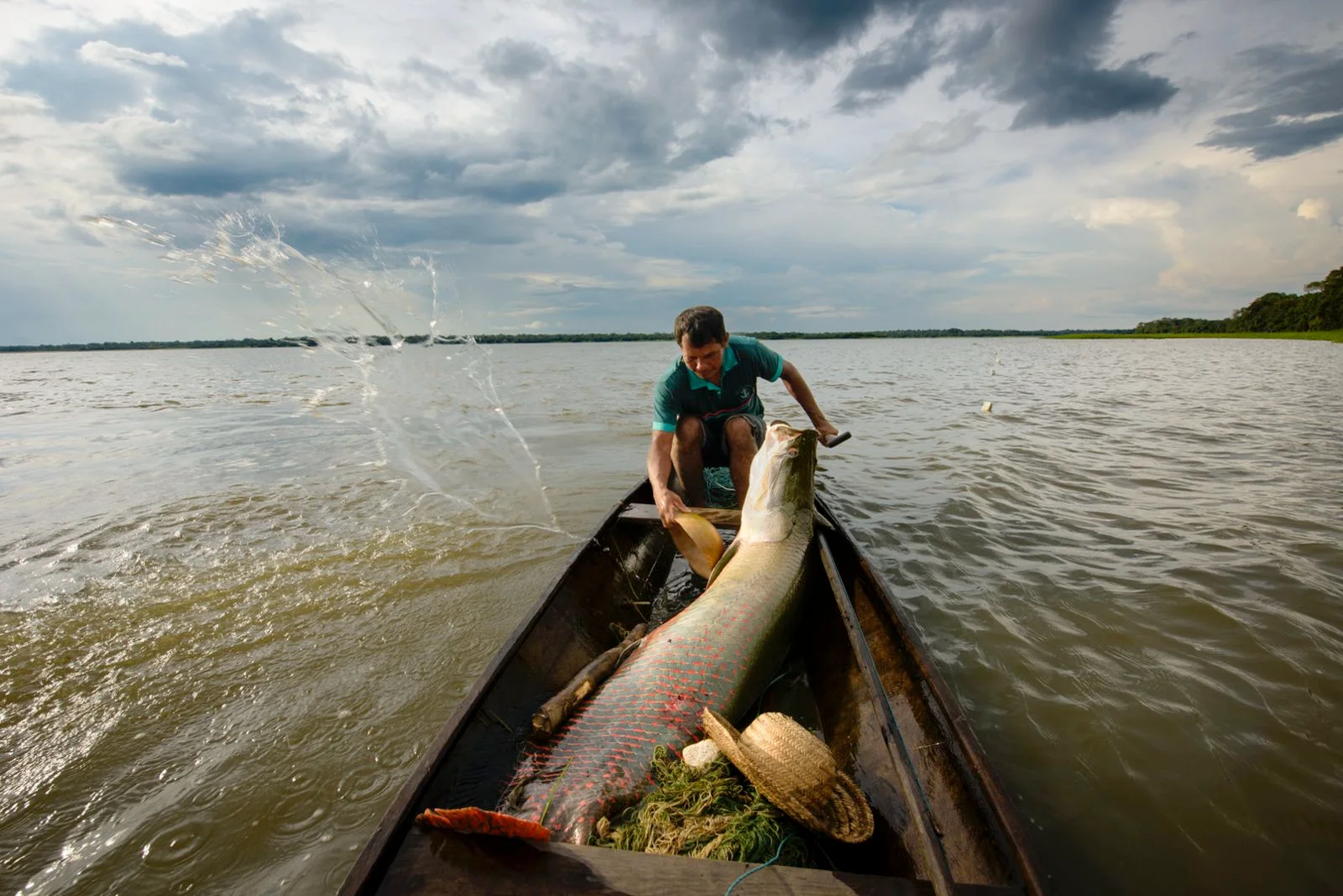
Genomic study could improve management and conservation efforts for the pirarucu, an important species in the Amazon bioeconomy
August 25, 2025
by Letícia Naísa
Understand how getting to know the Itacaiúnas river basin can help conserve Amazon in its entirety
September 25, 2025