Genomics of the Brazilian Biodiversity
DNA analysis reveals how to save species from extinction
Studies help define priority actions, such as habitat protection, breeding strategies, or the recovery of ecological corridors, for example.

In the case of the manatee, an endangered species, DNA analysis has helped define ideal strategies for how, when, and where to release individuals protected in captivity. PHOTO: Luciano Candisani
Why is it important to tell this story?
Genetic diversity should be one of the pillars of species conservation efforts. Genomic analyses provide crucial information for strategic decisions, such as the creation of ecological corridors and the protection of critical habitats. This story shows how scientists have been searching for these answers in DNA.
Partnerships and Collaborations
The Genomics of the Brazilian Biodiversity (GBB) project is led by the Vale Institute of Technology and the Chico Mendes Institute for Biodiversity Conservation. Over 300 researchers from national and international institutions such as the University of São Paulo, the Federal University of Pará and the University of Oxford in the UK are taking part, as are as hundreds of organizations such as Ibama and Fiocruz.
Mata N'Ativa Glossary
We work for access to scientific knowledge. Be sure to check out the glossary to get a clearer understanding of each of the concepts covered in this text!
Access Glossary
Twenty. Only 20. According to the researchers, this is the total number of cherry-throated tanagers in the wild. Nemosia rourei was first sighted in 1870 and only showed off its unique beauty again in the 1940s. Then it immersed itself in the forest and virtually became a legend - until it was rediscovered in 1998.
Found only in the state of Espírito Santo, the cherry-throated tanager "prefers primary Atlantic Forest environments above 800 meters in altitude. This means that the species' distribution is highly restricted," explains Marcelo Renan, coordinator of the Cherry-throated Tanager Conservation Program (PCSA) and president of the Marcos Daniel Institute, an organization in Espírito Santo that has been working to preserve the bird since 2020. At the time, a count conducted by the institute indicated a population of just ten individuals. After efforts began to protect their nests, this number doubled.
Now the species has been included in a national initiative to understand Brazilian fauna and flora: the Genomic Consortium of Brazilian Biodiversity (GBB). The endeavor could provide new answers and point the way toward freeing the cherry-throated tanager petrel from the threat of extinction.
The result of a public-private partnership between the Vale Institute of Technology (ITV) and the Chico Mendes Institute for Biodiversity Conservation (ICMBio), the initiative will study the genetics of over 600 species. One of the GBB's merits is the articulation of a network of national and international institutions with the infrastructure and expertise to analyze endangered species, invasive exotic species or species with bioeconomic potential.
The genetic evaluation, which is essential for conservation, comes at an opportune moment for the cherry-throated tanager: the bird's region of occurrence is subject to extensive anthropogenic actions. In past years, it was found in five areas of forest, but today it has disappeared from three of them. One has been devastated while a granite mine opened in another, bringing explosions and the constant circulation of trucks. As the area of distribution is fragmented, groups tend to become isolated, increasing the risk of inbreeding, which affects the population's ability to survive.

Cherry-throated tanager (Nemosia rourei). The cherry-throated tanager was first seen in 1870, spotted again in the 1940s, and then disappeared, reappearing in 1998. Today, about 20 individuals survive in the wild, but there is hope for the species' future: the sequencing of its genome. PHOTO: Gabriel Bonfa
Genetics in various studies
When people talk about conserving nature, they immediately think of a particular species or environment. The Amazon, for example, always comes up as a symbol of this debate. “But nobody thinks about genetics. And genetics is the basis of everything,” says Sibelle Vilaça, responsible for the GBB's axis of conservation. She explains that the United Nations (UN) Convention on Biological Diversity establishes three pillars for the preservation effort: in addition to biomes and their respective fauna and flora, equally important is genetic diversity, i.e. the variety of genes within a species.
With a planned investment of R$110 million by 2027, the GBB is working on different fronts. Reference genomes, for example, represent the complete map of an organism at a high level of quality - of a total of 80 planned projects, 38 are already underway. Population genomes, on the other hand, meet the need to understand genetic diversity: by analyzing several animals or plants of the same species, it is possible to study gene variability and inbreeding, as well as make various other inferences. In this field, studies are being carried out on a wide range of species, from small fish and large mammals to butterflies and plants.
The number of individuals analyzed varies from project to project. For the black lion tamarin (Leontopithecus chrysopygus), for example, there were 200. In the case of the cherry-throated tanager, the rarity of the species limited the number of individuals analyzed. Rarity and cleverness. To obtain DNA samples, the team from the Marcos Daniel Institute set up mist nets close to the canopy where the bird nests. Over a 15-day period, they only made one capture - despite seeing the animals every half hour. “They've learned to dodge and avoid the net,” says Marcelo Renan. Fortunately, in the first capture, four birds were trapped and it was possible to obtain feathers and blood for analysis, without injuring any of them. A dead chick was also found. For now, the population genome of the species is based on five samples.
No firm conclusions have been reached as yet, but the preliminary results brought good news: there are indications that there is a connection between the two populations 80 kilometers apart. “We need to ensure that the gene flow between the populations continues,” says Renan. But how? In addition to continuing to protect the nests, strategies must be created to recuperate the corridors of Atlantic Forest that connect the two regions.


The genetic evaluation, which is essential for conservation, comes at an opportune moment for the cherry-throated tanager: the bird's region of occurrence is subject to extensive anthropogenic actions.
In past years, it was found in five areas of forest, but today it has disappeared from three of them. One has been devastated while a granite mine opened in another, bringing explosions and the constant circulation of trucks.
As the area of distribution is fragmented, groups tend to become isolated.
Increasing the risk of inbreeding, which affects the population's ability to survive.
New data helps conservation
An emblematic animal has emerged as the protagonist of the GBB's inaugural project: Lahille's bottlenose dolphin (Tursiops gephyreus). Famous for its cooperative work with fishermen in Laguna, Santa Catarina, it is also commonly known as the “fishing dolphin.” Present in estuaries in Brazil, Uruguay and Argentina, the cetacean is critically endangered and has long warranted genetic analysis to clarify important issues, foremost among them the question of whether it is in fact its own species or a subspecies of the bottlenose dolphin (Tursiops truncatus). "We're going to define whether they are different taxa, so that we can think about conservation actions," explains Layse Albuquerque, a collaborating researcher at ICMBio's National Center for Research and Conservation of Aquatic Mammals (CMA) and the person responsible for the population genetics of the dolphins at the GBB.
While on a scholarship at the CMA, the researcher was invited to do a PhD on porpoises by Sandro Bonatto, a professor at the Pontifical Catholic University of Rio Grande do Sul (PUC-RS) who leads studies on the cetacean in Brazil. In a joint effort, the professor's team is studying specimens from Rio Grande do Sul and neighboring countries, while Albuquerque and the GBB are analyzing samples obtained in Santa Catarina and Paraná.
So far, the results are concerning. Based on an analysis of the population genomes, preliminary data points to high rates of inbreeding in the species for over 500 generations.
In addition, the effective population size (Ne)—a theoretical estimate that quantifies genetic diversity over time, combined with inbreeding and loss of genetic variability—has been declining for 2,000 years. The situation has worsened in the last two centuries, when the number took a sharp dive, likely due to an increase in anthropogenic influences on dolphin habitats - polluted regions, with heavy boat traffic and many fishing nets that can lead to the animals' death by gillnetting.
“The situation is critical and conservation is an absolute must,” says Albuquerque, who has previously presented this data to the International Whaling Commission (IWC), an organization that establishes strategies for marine mammals found in more than one country. The researcher is contributing to discussions on taxonomy that are part of the species' international management plan, a joint effort by Brazil, Uruguay and Argentina to improve the Lahaille's bottlenose dolphin's chances.
By elucidating the taxonomic status and conditions of the population, genetic data provides more certainty for decision-making. Within ICMBio, National Conservation Action Plans (PANs) are drawn up by the Coordination of Action Planning for the Conservation of Endangered Species (COPAN). These plans can be organized around a single species or a group of them, and will be subsidized with information obtained by the GBB. Among other measures, they establish practical actions, such as the need to protect habitats and reproduce in captivity.
“Some of the data that has been generated has already been of great value for managing the population of species and we hope that more information will come to support more assertive decisions for population management,” explains Mônica Mafra Valença-Montenegro, coordinator of the PANs for the conservation of primates of the Northeast, the Atlantic Forest and the collared sloth.
Amely Martins, coordinator of the GBB for ICMBio, believes in the data's potential to speed up actions, but this will depend on the ability to access and generate the genetic sequencing. One possibility, for example, is the analysis of specimens in cases of trafficking. “Knowing which populations these trafficked animals belong to and where they came from allows us to release them in suitable locations.” he says.

“Some of the data that has been generated has already been of great value for managing the population of species and we hope that more information will come to support more assertive decisions for population management”
Mônica Valença-Montenegro, coordinator of the National Action Plans for Conservation (PANs) of the primates of the Northeast, the Atlantic Forest and the collared sloth
Small species, huge challenges
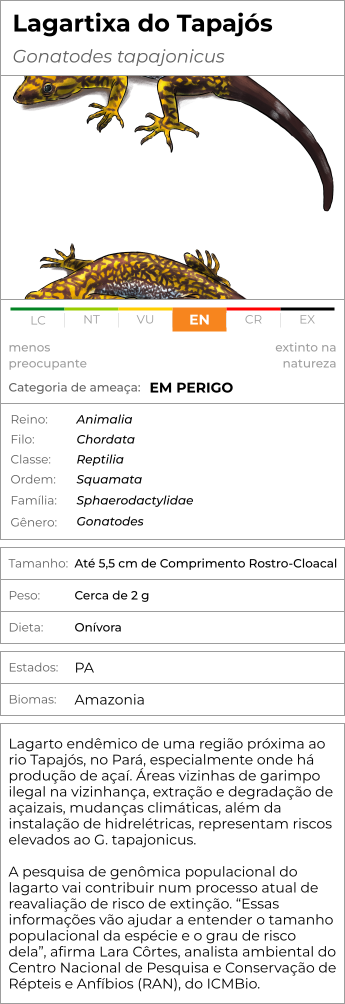
Eight population genome studies of reptiles and amphibians are currently underway. Among them are two species about which very little is known: the rustic frog (Pithecopus rusticus), which has a population of 40 individuals distributed in an unprotected region in Santa Catarina, and the restinga frog (Xenohyla truncata). Found only in the restingas of the state of Rio de Janeiro, the restinga frog is a rare amphibian that feeds on fruit and flowers. The species is spread across several isolated pockets of restinga, a risk to genetic diversity.
“Genetic studies help us plan simultaneous strategies,” says Lara Côrtes, an environmental analyst at ICMBio's National Center for Reptile and Amphibian Research and Conservation (RAN). Côrtes is responsible for selecting and monitoring the GBB projects linked to the RAN. Among the agency's actions are the creation of reserves, the re-establishment of corridors between isolated populations and management programs in situ, in the wild, or ex situ, in captivity. Another task is to identify the origin of captured animals and combat trafficking.


Among ICMBio's actions are the creation of reserves, the re-establishment of corridors between isolated populations, and management programs in situ (in the wild) or ex situ (in captivity).
Genomic studies can support breeding strategies, in captivity or in the wild, to promote genetic exchange between populations.
Another possibility is strengthening the fight against species trafficking: genetic analysis of seized plants or animals can pinpoint their origin with precision.
In addition to immediate conservation actions, population studies open the door to the species' past. “Evolution doesn't happen at the individual level, but at the population level,” says Sibelle Vilaça. By drawing parallels between the evolution of a species over time and climate variations, for example, it is possible to infer how it will react to similar events in the future. Hence the importance of maintaining continuous genetic monitoring, so that “we can understand this process in 10, 20 or 30 years time.”
To get to this point, those who work with amphibians have to overcome two challenges. The first is that, in most cases, obtaining DNA samples from these animals requires them to be sacrificed - a big problem when working with small populations. The second is the size of the genomic map of a single amphibian: a genome of approximately 7 gigabases (around 7 billion DNA base pairs), which can generate more than 500 gigabytes of raw data. Sequencing a reference genome of this size can take up to a month, depending on the sequencing capacity of the equipment used for the analysis. By comparison, there are some species for which a week is enough.
Curiously, Lara Côrtes and Sibelle Vilaça's "pet" projects are not just conservation-oriented. The RAN analyst is closely following a study of the population genetics of Podocnemis turtles in the Amazon, with a focus on their bioeconomic potential. The work is carried out in conservation units with management demands from traditional populations for whom the turtles are a source of food, but who wish to use them responsibly.
Vilaça doesn't hide her passion for sea turtles, with a special interest in a phenomenon that is almost exclusive to Brazil. “There are many hybrids in the country, like nowhere else in the world. Especially in Bahia,” she says. According to her, 30% of the chelonians found there are hybrids of the loggerhead turtle (Caretta caretta) and the hawksbill turtle (Eretmochelys imbricata). Why is this? Nobody knows for sure, but a reference genome project - the complete, more sophisticated genetic map - could begin to solve the riddle.

Red-bellied frog (Melanophryniscus admirabilis). The red-bellied frog occurs in only two stretches of Atlantic Forest in the municipality of Arvorezinha, Rio Grande do Sul. Genetic studies aim to understand if these two populations communicate and if crossbreeding between their individuals would be possible. PHOTO: Pedro Peloso
The sentimental appeal of 'fofofauna'
Researcher Michelle Abadie has been working with the admirable red-bellied toad (Melanophryniscus admirabilis) since 2010 and is responsible for the species' population genome project at the GBB as a collaborator with the Federal University of Rio Grande do Sul (UFRGS).
The admirable toad is a star. It is no more than 4 centimeters long, is sprinkled with beautiful red spots, and is very photogenic, literally—it's no wonder it was on the cover of the 2018 Red Book of Brazilian Fauna Threatened with Extinction. It is a rare amphibian that can be seen as part of the so-called 'cute fauna,' a group of animals capable of arousing sympathy, a feeling that facilitates preservation efforts.
The species already boasts a huge triumph. In 2010, a hydroelectric project endangered the only region where the animal lives, a stretch of the Forqueta River near the city of Arvorezinha, in Rio Grande do Sul. With funding from the Boticário Foundation, Abadie spent a year searching areas near the Forqueta for other signs of the species. And nothing. 'It was the evidence we needed to say that the species only existed there,' she says.
As the 2011 PAN for reptiles and amphibians was being developed at the time, it was possible to include the little toad. Subsequently, the UFRGS group coordinated efforts with ICMBio, NGOs, and the Public Prosecutor's Office of Rio Grande do Sul for what would seem impossible today: to cancel the construction of the hydroelectric plant. Since then, the researcher has more precisely defined the distribution area of the admirable toad: two different rock outcrops on the banks of the Forqueta, about 2 kilometers apart along the river. Between one thousand and two thousand animals live there, as she detailed in her doctoral thesis, defended in 2021.
This entire region is within a private property, and the tenants have embraced the protection of the species so much that it has become a local tourist attraction. Still, the future is not guaranteed. Over time, the land could change owners and fall into the hands of someone not committed to the issue. In addition, the city of Arvorezinha and the Forqueta River were severely affected by the floods in Rio Grande do Sul in 2023. A suspicious character has also appeared there, a Russian man who was later arrested for trafficking animals from Brazil abroad.
With the population genomics study, the expectation is to open new fronts for preservation. One of the starting points is to understand if there is crossbreeding between the two apparently separate populations. If ex situ reproduction is necessary, genomics helps identify the most suitable animals for it. Michelle Abadie has another curiosity. She uses the color pattern on the toads' bellies as a visual identity for each of them, with the goal of making a population estimate. 'I've always wanted to know if animals with more similar patterns are related.'
To complete the picture, there is also a desire to understand how much each little toad moves or is restricted to the site where it lives. Everything indicates that they are very faithful to their territory. 'Some individuals live for more than ten years,' says Márcio Borges-Martins, a professor at UFRGS who was Abadie's advisor and is now her colleague in the research with the GBB. 'There are toads that she photographed at the beginning of her work and found again on practically the same rock at the end of her doctorate.' Abadie and Borges-Martins will now use genomic analyses to understand the impact of recent years' floods on the population. And, in the long term, the expectation is to create a reserve for the species.
In the end, the admirable red-bellied toad has become a symbol of a recurring scenario among small animals: the threat of extinction shortly after their discovery. The toad was saved, but the challenge is to prevent it from becoming an isolated symbol.
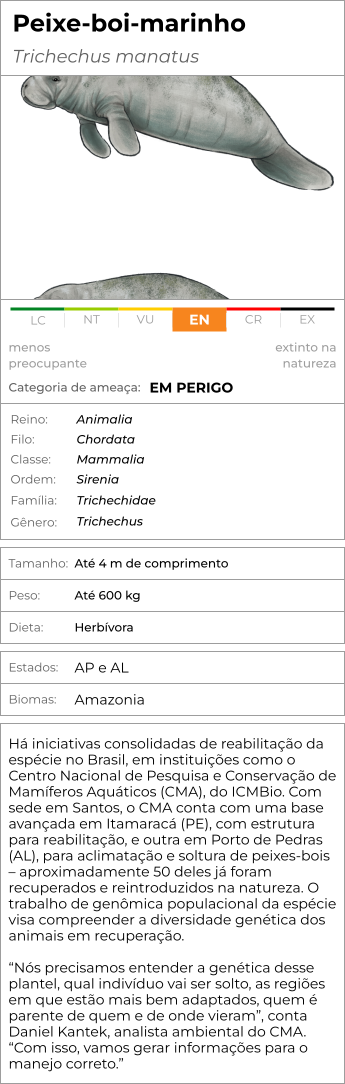
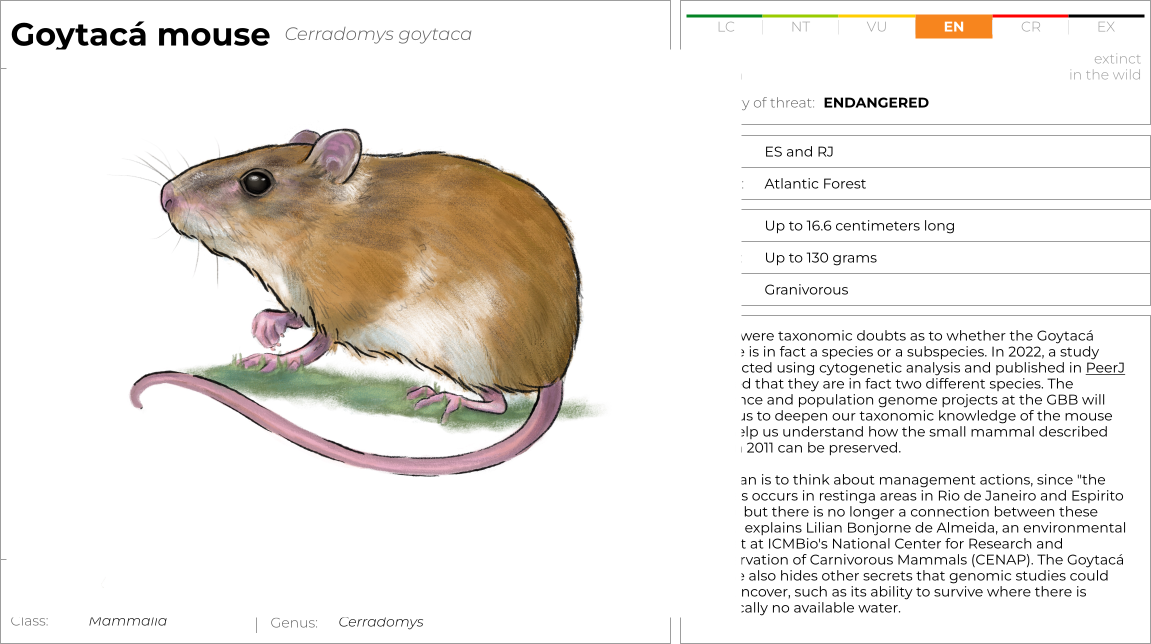
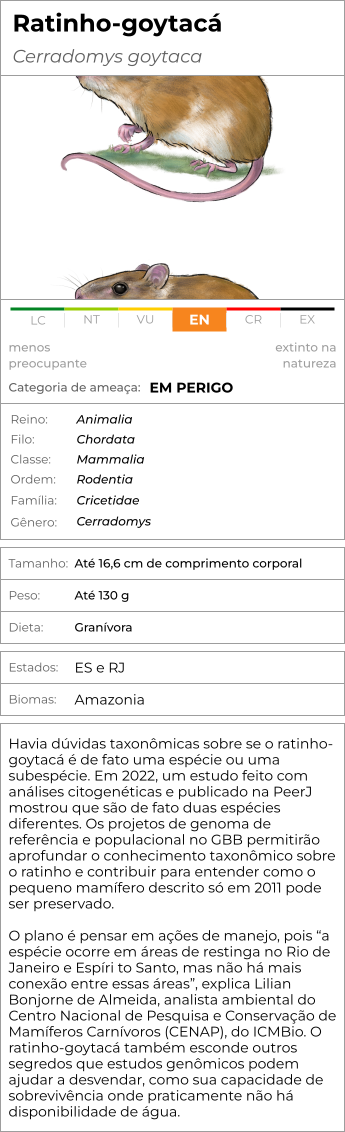
The illustrations on this page are visual artistic resources for educational purposes and do not represent scientific illustrations.
OTHER SPECIES


GLOSSARY
Inbreeding
breeding among individuals who are related in some way; it reduces the genetic variability of a population, which can lead to various problems, such as an increase in the frequency of recessive genetic diseases and less adaptation to the environment
Reference genome
DNA sequence that serves as a model or standard for representing the complete genome of a species, exemplifying its genetic organization; it is used to compare and analyze genetic variations between individuals, populations and species
Population genome
set of genetic variations within a population of organisms; the study of the population genome examines how DNA varies between individuals of the same species in different geographical locations, time periods or environmental conditions, allowing the calculation of important parameters that indicate the risk of species extinction
Gene flow
occurs when individuals migrate from one population to another and, when they reproduce, take their genes with them, mixing the genetic material between the groups
Gillnetting
when a marine animal gets caught in fishing nets, especially gillnets, a specific type used in coastal and estuarine waters
Taxonomy
science that classifies, names and organizes living beings into groups based on their common characteristics
Hybrid
an individual that is the offspring of genetically different parents, usually from different species or lineages
Ex situ reproduction
reproduction of species outside their natural habitat, such as in captivity, laboratories, botanical gardens, zoos, authorized breeders, etc.
Cytogenetic analysis
studies that investigate the chromosomes of an organism (quantity, structure and behavior) to understand important genetic aspects, such as species or population identification and taxonomic information
READ MORE
by Leticia Maia
Scientific consortium investigates DNA traces in Brazilian ecosystems to monitor and conserve species
August 25, 2025

by Ana Rita Martins
Genomic study can improve management and conservation actions for pirarucu, an important species for the Amazon bioeconomy
August 25, 2025
by Leticia Maia
Consortium brings together hundreds of researchers to map genomes of Brazilian species
August 25, 2025